Ingredient guide
Matcha: What Powdered Green Tea Brings to Your Cup
Also known as: Powdered shade-grown green tea, Camellia sinensis · By the VitaUSA360 Editorial Team
Quick answer
Matcha is finely stone-ground powder made from shade-grown green tea leaves (Camellia sinensis). Because you drink the whole leaf, a cup of matcha delivers more catechins, especially EGCG, than steeped green tea, together with L-theanine and caffeine. Research suggests the caffeine and L-theanine pair supports alertness and focus, and green tea catechins with caffeine have been studied for a modest role in weight management alongside diet and activity. Matcha contains caffeine, so keep an eye on your total daily intake.
| Source | Shade-grown leaves of the tea plant (Camellia sinensis), stone-ground into powder |
|---|---|
| How it is grown | Tea bushes are shaded for about 2–3 weeks before harvest |
| Key compounds | Catechins (especially EGCG), L-theanine, caffeine, chlorophyll |
| Flavor | Fresh, grassy and gently sweet, with a savory umami note |
| Caffeine | Varies by grade and serving size; check the label |
| Key safety point | Contains caffeine; FDA cites 400 mg a day as a general limit for most adults |
What is matcha?
Matcha is a vivid green powder made from the leaves of the tea plant, Camellia sinensis, the same plant behind green, black and oolong tea. What makes it special is how it is grown and processed. Background is in the Wikipedia article on matcha.
For several weeks before harvest, the tea bushes are shaded with reed screens or cloth. Less sunlight pushes the leaves to make more chlorophyll and more L-theanine, which gives matcha its deep green color and its smooth, savory taste. The leaves are steamed, dried, stripped of stems and veins, and slowly stone-ground into a fine powder. Japan’s best-known matcha regions include Uji near Kyoto and Nishio in Aichi.
Matcha has been part of the Japanese tea ceremony for centuries. Today it is just as at home in lattes, smoothies and ready-to-mix drink powders.
Matcha benefits backed by research
Matcha research draws on decades of green tea science. Here are four specific findings.
- More catechins per cup. A chemistry study in the Journal of Chromatography A (Weiss and Anderton) found that the EGCG available from drinking matcha was 137 times greater than from a popular steeped green tea and at least three times higher than the largest value reported for other green teas, because you drink the whole leaf. See it on PubMed.
- Calm focus from L-theanine and caffeine. In a placebo-controlled study in Nutritional Neuroscience (Owen et al.), 50 mg of caffeine with 100 mg of L-theanine improved speed and accuracy on an attention-switching task and reduced distraction during a memory task. See it on PubMed.
- Energy expenditure and weight management. Green tea catechins and caffeine have been studied for their role in energy expenditure. A meta-analysis in the International Journal of Obesity (Hursel et al.) found that catechins, or an EGCG and caffeine mix, had a small positive effect on weight loss and on keeping weight off afterward. See it on PubMed.
- A rich overall profile. A review in Molecules (Kochman et al.) summarizes matcha’s chemical composition, including catechins, amino acids, chlorophyll and vitamins. See it on PubMed.
The NCCIH green tea page sums it up: the catechins and caffeine in green tea may have a modest effect on body weight, and results depend on the product and on how active you are. In other words, matcha works best as part of a balanced diet and an active life.

How do you use matcha?
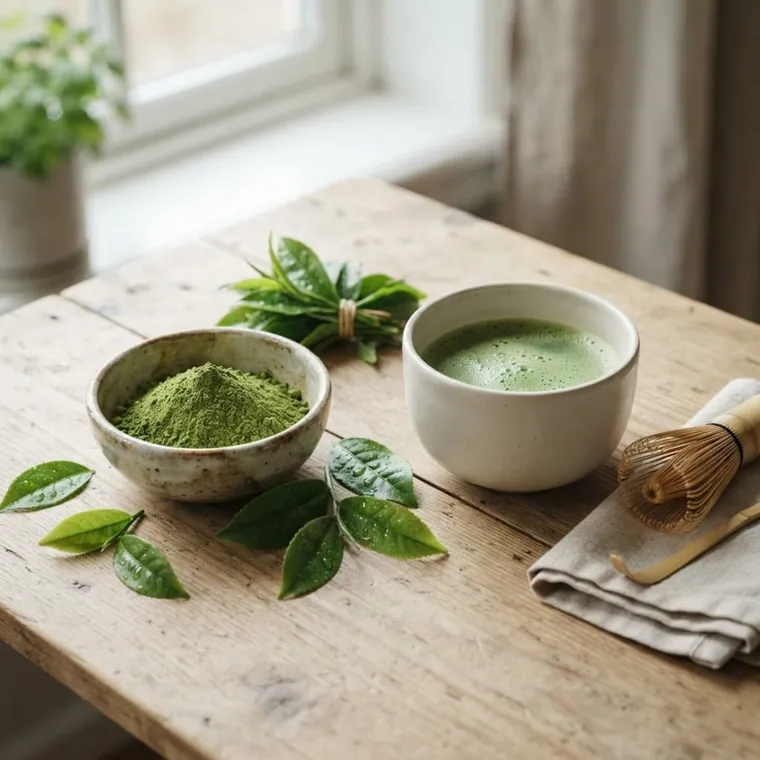
The classic way to use matcha is to whisk the powder into hot water. Sift about a teaspoon into a bowl, add a little water just below boiling, whisk in a quick zigzag until frothy, then top up to taste. Many people prefer it as a latte with warm milk or a plant-based drink.
- Water temperature. Water a little below boiling keeps the flavor smooth and less bitter.
- Morning or early afternoon. Because matcha contains caffeine, many people enjoy it earlier in the day.
- Ready-to-mix drinks. Matcha drink powders combine matcha with other ingredients and come with their own serving directions; follow those.
For a step-by-step method, see how to make matcha. If you are choosing between drinks, read matcha vs coffee, and for the weight-management side see green tea and weight management.
How does matcha appear on a label?
On a label, matcha may be listed as Matcha, matcha green tea powder, matcha tea leaf extract or Camellia sinensis leaf. Pure matcha powders often name a grade, such as ceremonial or culinary, and sometimes the region of origin.
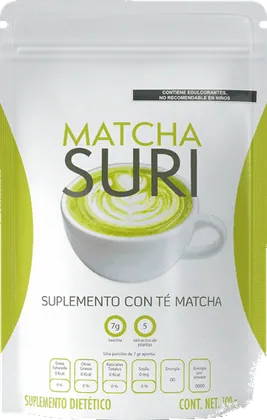
Drink mixes list ingredients in descending order of amount. Carriers such as maltodextrin, flavor helpers such as citric acid, and sweeteners are common, and a label that says the drink contains sweeteners will usually also note that it is not recommended for children.
Look for a stated serving size and, where given, the caffeine amount per serving. That makes it easy to fit matcha into your daily caffeine total.
Matcha safety, caffeine and interactions
Matcha brewed as a drink is a food-like use of green tea, and according to NCCIH, no safety concerns have been reported for green tea consumed as a beverage by adults. The main thing to watch is caffeine.
- Daily caffeine. The FDA cites 400 mg a day as an amount not generally associated with negative effects for most adults. Count matcha together with coffee, tea, soda and energy drinks.
- Caffeine sensitivity. If caffeine makes you jittery or affects your sleep, enjoy matcha earlier in the day or use a smaller serving.
- Pregnancy and breastfeeding. Keep caffeine moderate and ask your clinician about your limit.
- Concentrated extracts. NCCIH notes rare reports of liver problems, mainly with concentrated green tea extract tablets and capsules rather than tea drinks.
- Medicines. Green tea can lower blood levels of some medicines, including the beta-blocker nadolol and the statin atorvastatin. Ask a pharmacist if you take prescription medicine.
- Children. Caffeinated matcha drinks, especially those with sweeteners, are meant for adults.
Which products we review contain matcha?
Among the products we review, Matcha Suri is built around matcha tea leaf extract, together with spirulina extract, maltodextrin and citric acid. Matcha Suri is a matcha drink designed to support weight-management goals and everyday energy as part of a balanced diet. One serving a day is a teaspoon stirred into a glass of hot water (150 ml, about 5 fl oz), and the pack notes that it contains sweeteners and is not recommended for children. Read our Matcha Suri overview, or the versión en español, and browse the weight management section for related guides.
This guide is general information, not medical advice. Ask your doctor or pharmacist before starting a new supplement, especially if you take medication, are pregnant or nursing.
Sources
- NCCIH — Green Tea
- Wikipedia — Matcha
- Weiss D.J., Anderton C.R. Determination of catechins in matcha green tea by micellar electrokinetic chromatography. J Chromatogr A, 2003
- Hursel R. et al. The effects of green tea on weight loss and weight maintenance: a meta-analysis. Int J Obes, 2009
- Owen G.N. et al. The combined effects of L-theanine and caffeine on cognitive performance and mood. Nutr Neurosci, 2008