Ingredient guide
Marshmallow Root: How a Soothing Mucilage Herb Works
Also known as: Althaea officinalis, marsh mallow, althaea · By the VitaUSA360 Editorial Team
Quick answer
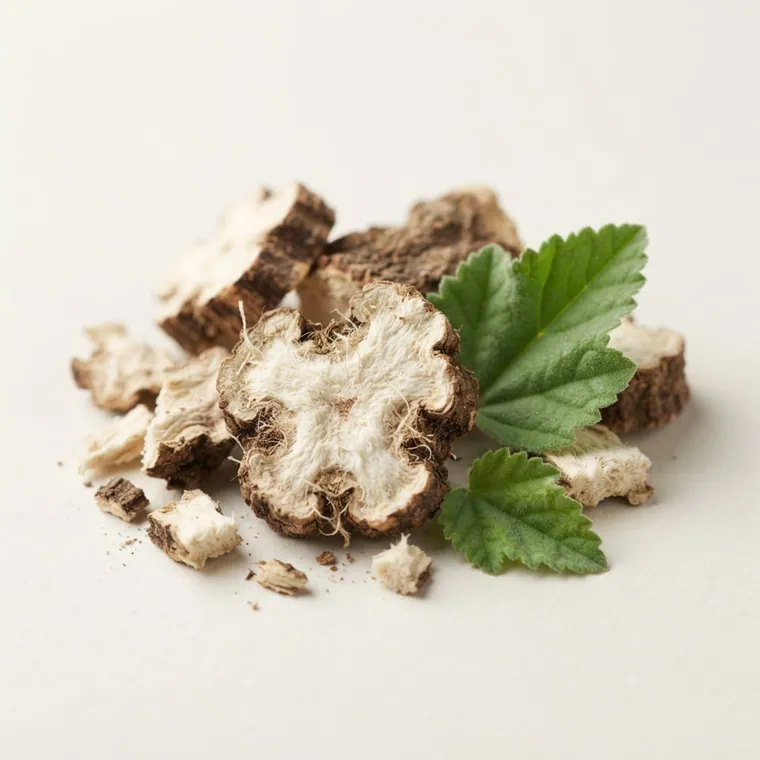
Marshmallow root is the dried root of Althaea officinalis, a tall perennial of the mallow family that grows in damp meadows and salt marshes. It is rich in mucilage, a gel-forming mix of polysaccharides that forms a soft, protective film on mucous membranes. That is why it has been used for centuries to soothe the throat and the digestive tract. The European Medicines Agency recognizes it as a traditional herbal ingredient for these uses.
| Plant part | Root (leaves and flowers are also used) |
|---|---|
| Native to | Europe, Western Asia and North Africa |
| Key compounds | Mucilage polysaccharides (rhamnogalacturonans), pectin, flavonoids |
| Traditional use | Soothing the throat, dry cough and mild stomach discomfort |
| Typical forms | Tea, syrup, lozenges, capsules, blends |
| Tip | Mucilage may slow absorption of other medicines; take them apart |
What is marshmallow root?
Marshmallow (Althaea officinalis) is a soft, velvety perennial plant of the mallow family that grows wild in moist meadows, riverbanks and salt marshes, which is how it got its name. The thick, white root is dug up in autumn, peeled and dried. You can read the botany in the Wikipedia article on Althaea officinalis.
The modern marshmallow candy takes its name from this plant: the original sweet was made from the root’s gel-forming sap. Today’s candy uses gelatin instead, but the herb remains a classic in teas, syrups and herbal blends.
What is mucilage, and why does it soothe?
Marshmallow root contains a large share of mucilage, a mix of water-loving polysaccharides, mainly of the rhamnogalacturonan type. When mixed with water, mucilage swells into a smooth, slippery gel.
On the lining of the mouth, throat or digestive tract, that gel forms a thin, protective layer over irritated tissue. That is the simple, physical reason marshmallow root is called a demulcent, or soothing herb. Other mucilage herbs include slippery elm and plantain leaf.

Marshmallow root benefits backed by research
Marshmallow root is best known through formal traditional-use assessments, supported by laboratory research on how its polysaccharides act on cells.
- Recognized traditional use. The European Medicines Agency summary on marshmallow root describes it as a traditional herbal ingredient for soothing irritation of the mouth or throat with an associated dry cough, and for relieving mild stomach and gut discomfort, based on long-standing use.
- Support for epithelial cells. A laboratory study in the Journal of Ethnopharmacology (Deters et al.) found that aqueous marshmallow root extract and its polysaccharides stimulated the vitality of human epithelial cells, the type of cells that line mucous membranes. See it on PubMed.
- Antioxidant activity. A cell study in Frontiers in Pharmacology (Bonaterra et al.) reported that marshmallow root extract helped protect human immune cells (macrophages) from oxidative stress. See it on PubMed.
In everyday terms, marshmallow root is a gentle, soothing herb that may help support comfort of the throat and digestive tract, with human studies continuing.
How does marshmallow root appear on a label?
Look for marshmallow root, marshmallow root extract, Althaea officinalis or the pharmacy name Althaeae radix. The leaf (Althaeae folium) is sometimes used too, so check which plant part is listed.
In teas, marshmallow root is often prepared as a cold infusion, because cool water draws out the mucilage well. In capsules it usually appears as a dry extract, often within a blend.
Marshmallow root safety and interactions
Marshmallow root is considered a gentle herb, and side effects are uncommon. A few practical points still matter.
- Other medicines. Because the mucilage coats the digestive tract, it may slow the absorption of medicines taken at the same time. A common suggestion is to take marshmallow root about an hour apart from other medicines.
- Blood sugar. If you take diabetes medication, ask a clinician before using concentrated marshmallow root products.
- Ongoing symptoms. The EMA summary advises seeing a doctor if throat irritation lasts longer than one week or stomach discomfort longer than two weeks.
- Pregnancy and nursing. Ask a clinician first.
Supplements are not a substitute for medical care, and this page is general information, not advice for your situation.
Which products we review contain marshmallow root?
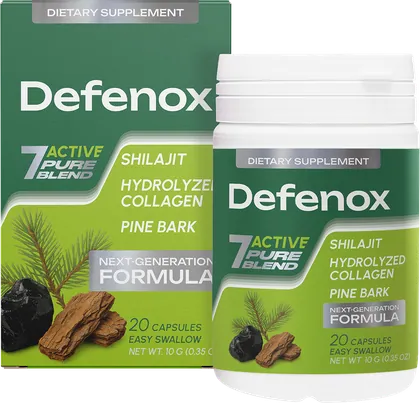
Among the products we review, Defenox lists marshmallow root extract (Althaea officinalis) in its seven-part blend. Defenox is a capsule supplement designed to support prostate and urinary comfort and everyday vitality in men, and it combines the soothing herb with passionflower, French maritime pine bark extract and hydrolyzed collagen. You can also browse our men’s health category for related guides.
This guide is general information, not medical advice. Ask your doctor or pharmacist before starting a new supplement, especially if you take medication, are pregnant or nursing.
Sources
- Wikipedia — Althaea officinalis
- European Medicines Agency — Althaeae radix (marshmallow root)
- Deters A. et al. Aqueous extracts and polysaccharides from Marshmallow roots (Althea officinalis L.) and human epithelial cells in vitro. J Ethnopharmacol, 2010
- Bonaterra G.A. et al. Anti-inflammatory and anti-oxidative effects of root extract of Althaea officinalis L. on macrophages in vitro. Front Pharmacol, 2020