Ingredient guide
Calendula (Pot Marigold) in Skin Care: What It Is and What Research Says
Also known as: Calendula officinalis, pot marigold · By the VitaUSA360 Editorial Team
Quick answer
Calendula (Calendula officinalis), also called pot marigold, is an orange-flowered garden herb whose petals are used in creams, balms and ointments for gentle, soothing skin care. It is a different plant from the Tagetes marigold used as a lutein source. Studies of calendula ointments have looked at skin irritation and wound care, and topical calendula is generally well tolerated apart from allergy in people sensitive to the daisy family.

| Botanical name | Calendula officinalis (family Asteraceae, the daisy family) |
|---|---|
| Common names | Calendula, pot marigold, garden marigold |
| Plant part used | Dried or fresh flower heads and petals |
| Key compounds | Carotenoids, flavonoids, triterpenoids |
| Typical forms | Infused oil, extract, ointments, creams and balms |
| Common INCI names | Calendula Officinalis Flower Extract, Calendula Officinalis Flower Oil |
| Not to be confused with | Tagetes (African or French marigold), the lutein source |
What is calendula, and is it the same as marigold?
Calendula (Calendula officinalis) is a bright orange-and-yellow flowering herb in the daisy family, long grown in European gardens and nicknamed “pot marigold”. The petals are collected, then dried or infused in oil to make extracts for cosmetics. The Wikipedia article on Calendula officinalis covers the plant’s history and botany.
Its vivid color comes from carotenoids, and the flowers also contain flavonoids and triterpenoids, groups of plant compounds studied for their antioxidant and soothing properties.
Not quite. “Marigold” is a common name shared by several plants. Calendula officinalis is the pot marigold used in skin care. The marigold sold as a lutein source for eye-support supplements is a different genus, Tagetes (African or French marigold), whose petals are extracted for lutein pigment; see the Wikipedia article on Tagetes. Our guide to lutein and zeaxanthin explains that side of the family.
The practical takeaway: when a label says “calendula” it means Calendula officinalis for the skin, and when it says “marigold extract” in an eye supplement it usually means Tagetes.
Calendula benefits backed by research
Calendula has been studied mostly as an ointment on the skin:
- Skin irritation during radiotherapy. In a phase III randomized trial by Pommier and colleagues, 254 women having radiation therapy after breast cancer surgery were assigned to calendula ointment or trolamine on the irradiated skin. Grade 2 or higher acute dermatitis occurred in 41% of the calendula group versus 63% of the trolamine group, and patients using calendula reported less radiation-related pain (PubMed).
- Wound care. Randomized clinical trials have studied calendula ointment on cesarean wounds (Jahdi et al., PubMed) and after episiotomy (De Angelis et al., PubMed), reflecting continued clinical interest in the herb for skin repair.
- Leg ulcers. A clinical examination of a marigold extract ointment in venous leg ulcers was reported to show faster wound closure in treated patients than in controls (PubMed); it was a small, early study.
Many of these studies used medical-grade ointments under clinical supervision, and larger trials are still needed. In cosmetics, calendula is valued as a gentle, soothing botanical for everyday skin comfort.
One reason calendula keeps attracting research is that its constituents have been examined in laboratory work for antioxidant and soothing activity. These findings are early, and they explain the herb’s long folk use more than they prove effects on human skin, but they help explain why it is a favorite in gentle, botanical-style formulas.

How is calendula used in skin-care products?
Calendula appears in baby balms, hand creams, lip care, after-sun products and gentle face creams. It is usually used as an oil infusion or a flower extract and is often paired with other soothing ingredients such as aloe vera and vitamin E.
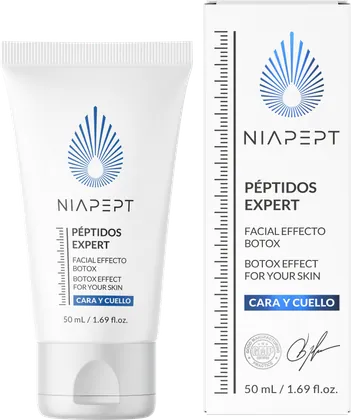
Niapept face and neck cream lists calendula among its key ingredients next to Argireline, niacinamide, hyaluronic acid and aloe vera, adding a soft, botanical comfort note to a peptide-based formula. For related reading, see our article on skin care after 50.
Because it is an oil-infused herb, calendula tends to show up in richer textures: balms, ointments and night creams. In water-based creams it is usually added as an extract. Either way, the amount in a formula is typically modest, which suits an ingredient that is valued as a gentle supporting botanical rather than the main active.
How to spot calendula on a label
On the INCI list look for Calendula Officinalis Flower Extract, Calendula Officinalis Flower Oil (an oil infusion) or Calendula Officinalis Extract. Retail cosmetic ingredients are listed generally in descending order of predominance, so the position tells you how much of it a formula contains (FDA).
Watch for “marigold” in the name. Tagetes extracts are used differently, and calendula in cosmetics is always listed under its Latin Calendula name. Calendula in a cream is a cosmetic ingredient, not a dietary supplement.
Calendula safety, side effects and interactions
Topical calendula is generally well tolerated. The main caution is allergy: because it belongs to the daisy family (Asteraceae), people who react to ragweed, chrysanthemums, daisies or marigolds may also react to calendula. If you are in that group, patch-test a small amount on the inner forearm for a day before applying a calendula product to your face.
Stop use if redness, itching or swelling develops. Calendula is not a replacement for medical care of a wound or rash, and ask a doctor or pharmacist before using products on open or infected skin, or if you are pregnant or breastfeeding and want to use concentrated calendula preparations.
Storage matters for botanical oils: keep products closed, out of direct sun and away from heat, and discard them if they smell off. Use as directed on the pack and check the full ingredient list for fragrance or essential oils if your skin is reactive.
A word on color: calendula extracts can tint a cream slightly yellow or peach, and that is a natural sign of the carotenoids in the petals rather than a dye. It is also why calendula-based balms sometimes look golden in the jar. Small shifts in shade between batches are normal for a plant-derived ingredient.
If you are building a gentle skin-care set, calendula pairs well with hydrating ingredients such as hyaluronic acid and with soothing aloe. Together they make a soft, comfortable base, and a peptide or niacinamide can sit on top for the look of smoother skin. Introduce one new product at a time so you can tell how your skin responds to each.
Which products we review contain calendula?
Our reviewed product with calendula is Niapept. To learn about the other ingredients in that formula, see hyaluronic acid, aloe vera, niacinamide and Argireline.
This guide is general information, not medical advice. Ask your doctor or pharmacist before starting a new supplement, especially if you take medication, are pregnant or nursing.
Sources
- Wikipedia — Calendula officinalis
- Wikipedia — Tagetes
- U.S. FDA — Cosmetic ingredient names
- U.S. FDA — Cosmetics labeling guide
- Pommier P. et al. Phase III randomized trial of Calendula officinalis compared with trolamine for acute dermatitis during breast irradiation. J Clin Oncol
- Jahdi F. et al. Calendula ointment and cesarean wound repair: a randomized controlled trial. J Family Med Prim Care
- De Angelis C. et al. Use of calendula ointment after episiotomy: a randomized clinical trial. J Matern Fetal Neonatal Med