Ingredient guide
Spirulina: The Blue-Green Alga Packed With Protein and Pigments
Also known as: Arthrospira platensis, Limnospira platensis, blue-green algae · By the VitaUSA360 Editorial Team
Quick answer
Spirulina is the dried biomass of a blue-green microalga, Arthrospira (now also classified as Limnospira) platensis. It is more than half protein by dry weight and supplies iron, B vitamins and the blue pigment phycocyanin. Research suggests spirulina may help support weight-management goals and antioxidant defenses as part of a balanced diet. Choose products tested for purity, and people with phenylketonuria or autoimmune conditions should ask a clinician first.
| Organism | Cyanobacterium (blue-green alga): Arthrospira platensis and A. maxima, now also called Limnospira |
|---|---|
| Protein | About 57% of dry weight |
| Key pigments | Phycocyanin (blue), chlorophyll (green), beta-carotene |
| Notable nutrients | Iron, copper, thiamin, riboflavin, niacin |
| Typical forms | Powder, tablets, drink mixes; blue spirulina extract as a natural food color |
| Key safety point | Choose purity-tested products; ask first with PKU or autoimmune conditions |
What is spirulina?
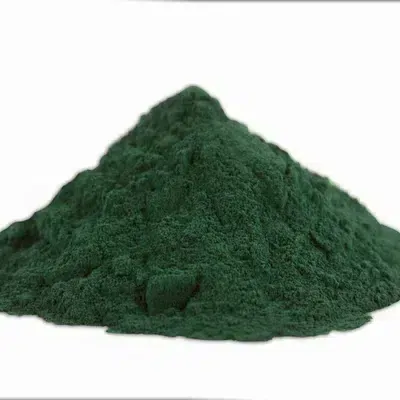
Spirulina is the dried biomass of a microscopic, spiral-shaped cyanobacterium, often called a blue-green alga. The species sold as spirulina are Arthrospira platensis and A. maxima, which scientists have recently moved to the genus Limnospira. It grows naturally in warm, alkaline lakes and is farmed today in open ponds and closed systems. Background is in the Wikipedia article on spirulina.
Nutritionally, spirulina is remarkable. Dried spirulina is about 57% protein, with a rich supply of iron, copper and B vitamins such as thiamin, riboflavin and niacin. Its color comes from two pigments: green chlorophyll and blue phycocyanin.
Phycocyanin is so vivid that a purified spirulina extract is used as a natural blue food color in candy, drinks and ice cream. See the Wikipedia article on phycocyanin.
Spirulina benefits backed by research
Spirulina has been studied in human trials for weight management, antioxidant support and immune balance. Here are the key findings.
- Weight management. A systematic review and meta-analysis in Complementary Therapies in Medicine (Moradi et al.) pooled five randomized trials and found greater reductions in body weight, body fat percentage and waist circumference with spirulina than with control, with the largest changes in people with obesity. See it on PubMed.
- A broad human-research overview. A review in Evidence-Based Complementary and Alternative Medicine (Karkos et al.) notes that spirulina became famous after NASA used it as a dietary supplement for astronauts, and summarizes research on its immune-modulating, antioxidant and antiallergic properties. See it on PubMed.
- Phycocyanin as an antioxidant. The blue pigment phycocyanin is widely studied in the laboratory for its antioxidant activity, one reason spirulina extracts are popular in wellness drinks.
As with most whole-food supplements, spirulina works best as part of a balanced diet, regular activity and good sleep. Larger trials are ongoing.

How do you use spirulina?
Spirulina is most often used as a powder stirred into drinks or as tablets. Its flavor is deep, green and slightly sea-like, so it pairs well with fruit smoothies, citrus juice and green drinks such as matcha.
- Start small. Begin with a small amount and build up, following the product’s directions.
- Mix well. Spirulina powder clumps in water; shake it in a bottle or blend it.
- Blue extract. Spirulina extract, rich in phycocyanin, has a much milder taste and appears in drink mixes for color and as a botanical ingredient.
One nutrition note: spirulina is not a reliable source of active vitamin B12, because most of its B12 is a form called pseudovitamin B12. If you follow a vegan diet, keep a dedicated B12 source.
How does spirulina appear on a label?
On a label, look for Spirulina, Arthrospira platensis, Spirulina platensis or, on newer labels, Limnospira. Whole spirulina powder lists the full algal biomass; spirulina extract is a concentrated fraction, often valued for its phycocyanin.
Good products say where the spirulina is grown and that each batch is tested for purity, including microcystins (toxins made by some other blue-green algae) and heavy metals. Third-party seals add confidence; our guide to supplement regulation and third-party testing explains what they mean.
Spirulina safety, side effects and interactions
Spirulina from a quality-controlled source is generally well tolerated. The most common side effects are mild: digestive upset, a feeling of fullness or headache when starting. Keep these reader-safety points in mind.
- Purity. Blue-green algae harvested from the wild can be contaminated with microcystins or heavy metals, so choose tested, cultivated products. The NIH LactMed entry on spirulina discusses this.
- Phenylketonuria (PKU). Spirulina is rich in protein and contains phenylalanine, so people with PKU should avoid it.
- Autoimmune conditions and immune-suppressing medicines. Because spirulina is studied for its effects on immune activity, ask a clinician first.
- Blood thinners and diabetes medicine. Ask a pharmacist before combining.
- Pregnancy, breastfeeding and children. Ask a clinician before use.
A dietary supplement is not a medicine and does not replace treatment from your doctor.
Which products we review contain spirulina?
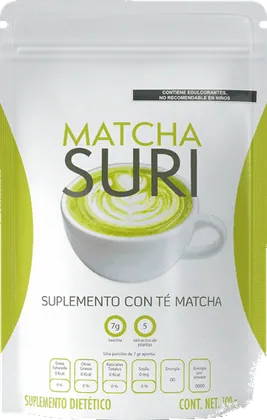
Among the products we review, Matcha Suri lists spirulina extract next to matcha tea leaf extract, maltodextrin and citric acid. Matcha Suri is a matcha drink designed to support weight-management goals and everyday energy as part of a balanced diet, with one teaspoon a day in a glass of hot water. To learn about its main ingredient, read our matcha guide, then see the Matcha Suri product page for directions and pack notes.
This guide is general information, not medical advice. Ask your doctor or pharmacist before starting a new supplement, especially if you take medication, are pregnant or nursing.
Sources
- Wikipedia — Spirulina (dietary supplement)
- Moradi S. et al. Effects of Spirulina supplementation on obesity: systematic review and meta-analysis of randomized clinical trials. Complement Ther Med, 2019
- Karkos P.D. et al. Spirulina in clinical practice: evidence-based human applications. Evid Based Complement Alternat Med, 2011
- NIH LactMed — Spirulina
- Wikipedia — Phycocyanin