Ingredient guide
Gotu Kola: The Ayurvedic Leaf Behind Tonic Blends and Cica Creams
Also known as: Centella asiatica, Indian pennywort, cica · By the VitaUSA360 Editorial Team
Quick answer
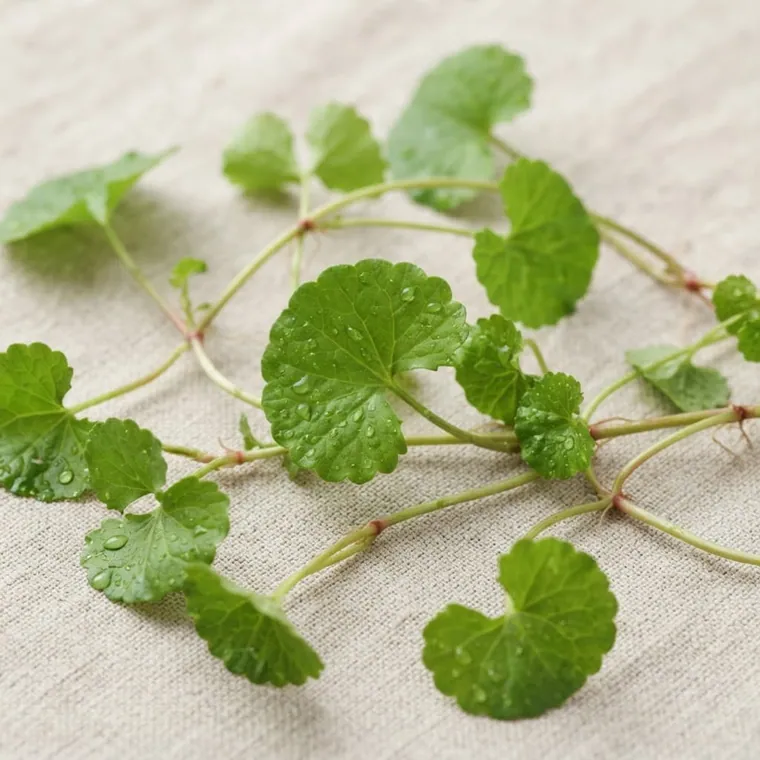
Gotu kola (Centella asiatica) is a small, creeping herb with round leaves, used for centuries in Ayurvedic and Chinese herbal practice and eaten as a leafy green in Sri Lanka and Southeast Asia. Its key compounds are triterpenes such as asiaticoside and madecassoside. Research has looked at gotu kola for skin support, circulation, calm and alertness. It is generally well tolerated; people with liver conditions, those taking sedatives, and pregnant women should ask a clinician first.
| Plant part | Leaves and stems (aerial parts) |
|---|---|
| Plant family | Parsley family (Apiaceae) |
| Key compounds | Triterpenes: asiaticoside, madecassoside, asiatic acid, madecassic acid |
| Traditional names | Mandukaparni in Ayurveda; Indian pennywort; “cica” in skin care |
| Food use | Gotu kola sambol in Sri Lanka; fresh juices in Thailand and Vietnam |
| Key safety point | Ask a clinician with liver conditions, sedatives or pregnancy |
What is gotu kola?
Gotu kola is Centella asiatica, a low, creeping plant of wet tropical places with small, fan-shaped leaves on long stems. It grows across India, Sri Lanka, Southeast Asia, southern Africa and the Pacific. Background on the plant is in the Wikipedia article on Centella asiatica.
In Ayurveda, gotu kola is known as mandukaparni and is valued as a rasayana, a rejuvenating tonic herb. In Sri Lanka, the fresh leaves are chopped into a salad called gotu kola sambol, and in Thailand and Vietnam they are blended into a bright green drink.
The compounds behind most research are pentacyclic triterpenes: asiaticoside, madecassoside, asiatic acid and madecassic acid. In skin care the plant goes by the nickname “cica”, and many soothing creams are built around it.
Gotu kola benefits backed by research
Gotu kola research spans skin, circulation and mood. Here are three specific findings.
- Skin and collagen. A review in Postępy Dermatologii i Alergologii (Bylka et al.) describes how gotu kola triterpenes support fibroblast activity and collagen synthesis, and summarizes its use in skin-care products for aging skin, stretch marks and the look of cellulite. See it on PubMed.
- A broad skin-research overview. A second review by the same group in Phytotherapy Research gives an overview of gotu kola in dermatology and its triterpene chemistry. See it on PubMed.
- Alertness and calm mood. A systematic review and meta-analysis in Scientific Reports (Puttarak et al.) found that gotu kola improved alertness scores and reduced anger scores one hour after intake, with no adverse effects reported in the included trials. Larger studies on memory are ongoing. See it on PubMed.
Standardized gotu kola extracts have also been studied for leg circulation and comfort, one of the reasons the herb is popular in European herbal products.

Why is gotu kola used in botanical cleanse formulas?
Gotu kola is used in botanical cleanse and wellness formulas as a gentle tonic herb. In Ayurvedic tradition it is taken to support overall vitality and a calm, clear mind, which makes it a natural partner for stronger digestive herbs.
In a blend, gotu kola balances the bitterness of wormwood and the warmth of turmeric. It also shares a plant family with celery, since both belong to the Apiaceae. For another Ayurvedic botanical with a long tonic tradition, see our page on amla.
How does gotu kola appear on a label?
On a supplement label, look for Gotu kola or Centella asiatica, often with the plant part (leaf or aerial parts) and either a powder or an extract weight. Some extracts state a standardization to total triterpenes or to asiaticoside.
On skin-care labels the plant appears as Centella Asiatica Extract, Centella Asiatica Leaf Extract, or as individual compounds such as Madecassoside and Asiaticoside. Products marketed as “cica” creams are built around these.
One naming note: gotu kola is sometimes called “brahmi” in parts of India, a name also used for a different herb, Bacopa monnieri. The Latin name on the label tells you which plant is inside.
Gotu kola safety, side effects and interactions
Gotu kola is a traditional food plant and is generally well tolerated in the amounts used in finished products. The most reported side effects are mild stomach upset and, rarely, drowsiness. Keep these reader-safety points in mind.
- Liver. Rare cases of liver problems have been reported with gotu kola supplements. People with a liver condition should ask a clinician before use, and anyone who notices dark urine or yellowing of the skin or eyes should stop and see a clinician.
- Sedatives and sleep aids. Gotu kola may add to drowsiness from sedative medicines, sleep aids or alcohol.
- Pregnancy and breastfeeding. Avoid gotu kola supplements unless a clinician advises otherwise.
- Surgery. Stop herbal supplements about two weeks before scheduled surgery and tell your surgeon what you take.
- Skin products. Cica creams are generally gentle, but patch test first if you have sensitive skin.
A dietary supplement is not a medicine and does not replace treatment from your doctor.
Which products we review contain gotu kola?
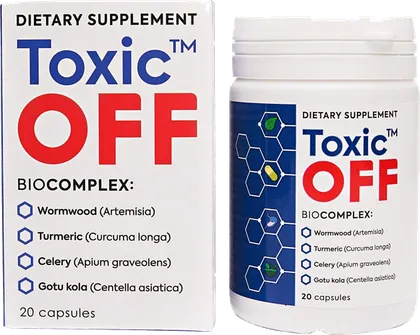
Among the products we review, Toxic OFF includes gotu kola (Centella asiatica) in its botanical biocomplex. Toxic OFF is a botanical cleanse formula designed to support digestion and the body’s natural cleansing, with one capsule a day. Gotu kola works there alongside wormwood, turmeric, celery and amla. Read the Toxic OFF overview for the complete formula.
This guide is general information, not medical advice. Ask your doctor or pharmacist before starting a new supplement, especially if you take medication, are pregnant or nursing.
Sources
- Wikipedia — Centella asiatica
- Bylka W. et al. Centella asiatica in cosmetology. Postepy Dermatol Alergol, 2013
- Bylka W. et al. Centella asiatica in dermatology: an overview. Phytother Res, 2014
- Puttarak P. et al. Effects of Centella asiatica on cognitive function and mood related outcomes: systematic review and meta-analysis. Sci Rep, 2017