Ingredient guide
Argireline: What the “Expression-Line” Peptide Is
Also known as: acetyl hexapeptide-8 / acetyl hexapeptide-3 · By the VitaUSA360 Editorial Team
Quick answer
Argireline is the trade name of acetyl hexapeptide-8 (also listed as acetyl hexapeptide-3), a short synthetic peptide used in creams and serums for the look of expression lines — the creases from smiling, squinting and frowning. It is a cosmetic ingredient applied to the skin, not an injection. Early laboratory and small clinical studies looked at its effect on the appearance of wrinkle depth.

| INCI names | Acetyl hexapeptide-8, acetyl hexapeptide-3 |
|---|---|
| Type | Synthetic signal peptide (six amino acids) |
| Used for | The look of expression lines |
| Typical products | Eye creams, face creams, serums |
| Format | Topical only — not an injectable |
A short peptide with a specific job
Peptides are short chains of amino acids. Argireline is a six-amino-acid peptide designed in the early 2000s to target the look of dynamic wrinkles — the lines that appear when facial muscles move.
What the research looked at
The original paper (Blanes-Mira et al., 2002) described laboratory work and a small study in which a cream with the peptide reduced the measured depth of wrinkles around the eyes. Later small studies explored similar endpoints. That is why the ingredient is popular in creams for crow’s feet and forehead lines.

Argireline benefits backed by research
Argireline is a cosmetic peptide, and its research is focused on the visible look of expression lines. Here is what is on record.
The original paper describes the design. Blanes-Mira et al. in the International Journal of Cosmetic Science introduced the hexapeptide and reported that a cream containing it was associated with a measured reduction in wrinkle depth around the eyes in volunteers.
The proposed mechanism is specific. The peptide imitates part of a protein called SNAP-25, which takes part in the SNARE complex that regulates the release of signaling molecules at nerve endings. The Acetyl hexapeptide-8 entry explains this proposed mode of action, which is why the ingredient is positioned for dynamic lines rather than for general dryness.
US regulators distinguish cosmetics from drugs. The FDA cosmetics page explains that cosmetics are products intended to cleanse or beautify and alter appearance. That is how peptide creams are positioned: as skincare that supports how skin looks.
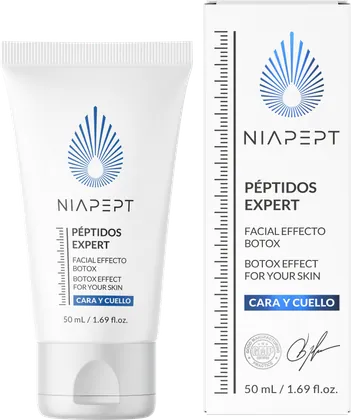
It pairs naturally with other skincare ingredients. Formulators often combine it with niacinamide and hyaluronic acid, as in Niapept face and neck cream. Research on topical peptides is still developing, and larger controlled studies are welcome. Give any new cream several weeks of consistent use and finish the day with sunscreen.
Why it is called “needle-free”
Marketing often compares peptide creams to injections because both are associated with expression lines. The difference is fundamental: a cream acts on the surface of the skin and is cosmetic; an injection is a medical procedure. Think of a peptide cream as part of your daily skincare, not a substitute for a dermatologist.
Using a peptide cream
Apply consistently to clean skin, usually once or twice a day, and give it several weeks. Combine it with hydration (hyaluronic acid) and daily sunscreen. Patch-test first if your skin is sensitive.
This guide is general information, not medical advice. Ask your doctor or pharmacist before starting a new supplement, especially if you take medication, are pregnant or nursing.