Ingredient guide
Turmeric (Curcuma longa): What Curcumin Brings to a Botanical Formula
Also known as: Curcuma longa, curcumin · By the VitaUSA360 Editorial Team
Quick answer
Turmeric is the golden-orange rhizome of Curcuma longa, a plant in the ginger family. Its best-known compounds are curcuminoids, led by curcumin, which have been studied for their antioxidant activity and their role in the body’s inflammatory balance. Curcumin is absorbed better when paired with black pepper extract (piperine) or fat. Turmeric is widely used as a spice, and people on blood thinners or with gallbladder problems should ask a clinician before taking it as a supplement.
| Plant part | Rhizome (underground stem), fresh or dried and ground |
|---|---|
| Plant family | Ginger family (Zingiberaceae) |
| Key compounds | Curcuminoids: curcumin, demethoxycurcumin, bisdemethoxycurcumin; turmerones in the oil |
| Food sources | Curry powders, golden milk, mustard, rice and lentil dishes |
| Absorption tip | Often paired with black pepper extract (piperine) or taken with food containing fat |
| Key safety point | Ask a clinician with blood thinners or gallbladder problems |
What is turmeric?
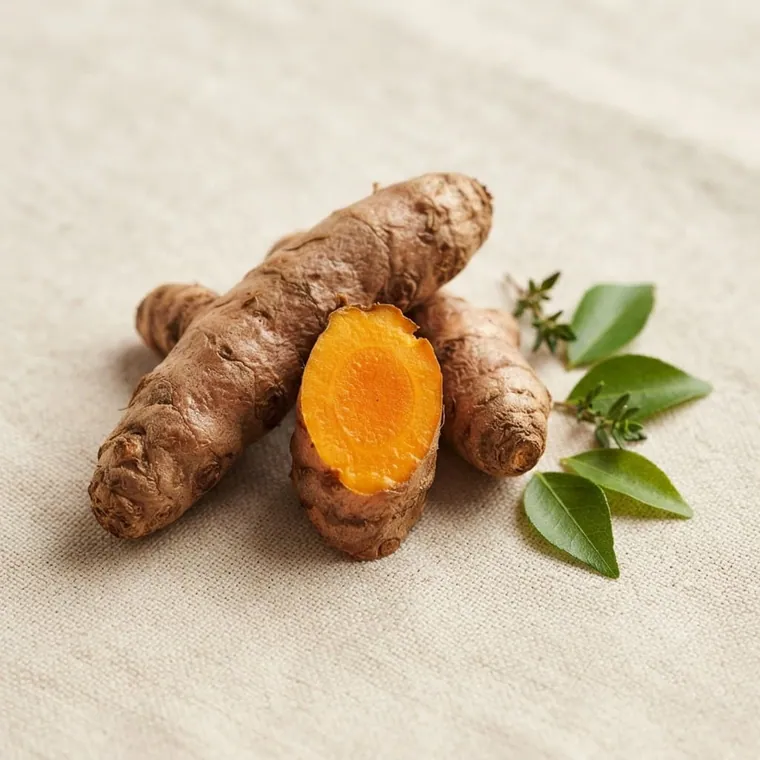
Turmeric is the dried, ground rhizome of Curcuma longa, a leafy tropical plant related to ginger and grown mainly in India and Southeast Asia. Cut a fresh root open and you see the bright orange flesh that gives curry its color. Background on the plant is in the Wikipedia article on turmeric.
The compounds that give turmeric its color are the curcuminoids, and the main one is curcumin. They make up a few percent of turmeric powder by weight, which is why supplements often use concentrated extracts. Turmeric also contains an aromatic oil with compounds called turmerones.
According to the NCCIH, the federal research center for complementary approaches, turmeric has a long history in Indian Ayurvedic, Chinese, Thai and other traditional systems, including use for indigestion. Today it is a popular spice and botanical supplement worldwide.
Turmeric benefits backed by research
Curcumin is one of the most studied plant compounds in the world. Here are three specific findings.
- Antioxidant and inflammatory-balance support. A review in Foods (Hewlings and Kalman) summarizes human studies on curcumin and oxidative stress, inflammatory balance and exercise-related muscle soreness, and notes that pairing it with piperine improves absorption. See it on PubMed.
- Joint comfort. A meta-analysis of randomized trials in the Journal of Medical Food (Daily et al.) found that turmeric extracts, at about 1,000 mg of curcumin a day, improved pain and function scores in people with joint arthritis compared with placebo. The authors call for larger studies. See it on PubMed.
- Better absorption with black pepper. In a study in Planta Medica (Shoba et al.), adding 20 mg of piperine to 2 g of curcumin raised curcumin bioavailability in human volunteers by about 2,000 percent. See it on PubMed.
NCCIH notes that research on turmeric for joint comfort is encouraging and that larger, higher-quality studies are ongoing.

Why is turmeric used in digestive and cleanse formulas?
Turmeric is used in digestive and cleanse formulas because of its deep roots in traditional digestive use and its antioxidant curcuminoids. In Ayurvedic cooking, turmeric is added to lentils, rice and vegetables partly for flavor and partly because it is considered warming and good for digestion.
In a botanical blend, turmeric adds an earthy, warm counterpoint to bitter herbs. It sits naturally next to wormwood, the classic digestive bitter, and next to celery and gotu kola. If you like the ginger family, see also our page on ginger, turmeric’s close botanical cousin.
How does turmeric appear on a supplement label?
On a label, look for Turmeric or Curcuma longa, with the plant part (root or rhizome) and whether it is a powder or an extract.
- Turmeric root powder is the whole ground spice, with its natural mix of curcuminoids, oils and fiber.
- Turmeric extract is concentrated, and some labels state a standardization such as 95% curcuminoids.
- Piperine or black pepper extract is often listed nearby to support absorption.
- Enhanced-absorption forms use phospholipids, micelles or similar technologies. They are labeled with a brand or form name.
In multi-herb capsules, turmeric is often part of a named blend, so the label may give a total blend weight rather than an amount for turmeric alone. Both formats are common.
Turmeric safety, side effects and interactions
According to NCCIH, turmeric or curcumin in conventional form is likely safe in recommended amounts for up to two or three months. The most common side effects are digestive, such as nausea, acid reflux, stomach upset, diarrhea or constipation.
- Blood thinners. If you take warfarin, antiplatelet medicine or other blood thinners, ask a clinician first.
- Gallbladder. Turmeric can stimulate gallbladder activity, so people with gallstones or bile-duct problems should ask a clinician first.
- Enhanced-absorption products. NCCIH reports rare cases of liver problems with some highly bioavailable curcumin formulations. If you notice fatigue, poor appetite, dark urine or yellowing of the skin or eyes, stop and contact your clinician.
- Pregnancy and breastfeeding. Turmeric as a cooking spice is fine; turmeric supplements are best avoided during pregnancy.
- Other medicines. Ask a pharmacist if you take diabetes medicine or several prescriptions.
A dietary supplement is not a medicine and does not replace treatment from your doctor.
Which products we review contain turmeric?
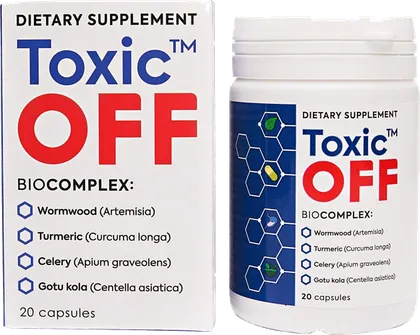
Among the products we review, Toxic OFF includes turmeric (Curcuma longa) in its botanical biocomplex, together with wormwood, celery, gotu kola and amla. Toxic OFF is a botanical cleanse formula designed to support digestion and the body’s natural cleansing, taken as one capsule a day. See the Toxic OFF product page for directions and the full ingredient list.
This guide is general information, not medical advice. Ask your doctor or pharmacist before starting a new supplement, especially if you take medication, are pregnant or nursing.
Sources
- NCCIH — Turmeric
- Wikipedia — Turmeric
- Hewlings S.J., Kalman D.S. Curcumin: a review of its effects on human health. Foods, 2017
- Daily J.W. et al. Turmeric extracts and curcumin for joint arthritis symptoms: systematic review and meta-analysis. J Med Food, 2016
- Shoba G. et al. Influence of piperine on the pharmacokinetics of curcumin in animals and human volunteers. Planta Med, 1998