Ingredient guide
Boswellia Serrata: What Indian Frankincense Brings to a Joint Formula
Also known as: Boswellia serrata, Indian frankincense · By the VitaUSA360 Editorial Team
Quick answer
Boswellia serrata, also called Indian frankincense, is a tree whose gum resin is used in supplements. Its active compounds are boswellic acids, including AKBA. Boswellia extracts are common in joint-support formulas and have been studied in people with knee joint discomfort. It is usually well tolerated; mild stomach upset is the most reported side effect.
| Plant part | Gum resin from the bark |
|---|---|
| Native to | India and parts of the Middle East and North Africa |
| Key compounds | Boswellic acids, especially AKBA |
| Typical forms | Standardized extracts in capsules and tablets |
| Common pairings | Turmeric, Devil’s Claw, MSM, glucosamine |
From tree resin to capsule
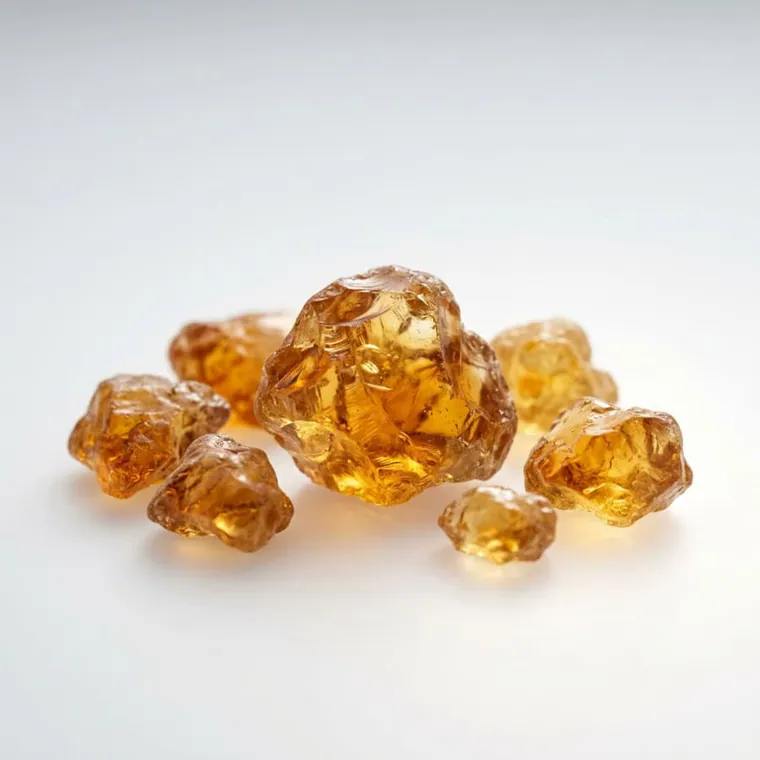
When the bark of the Boswellia serrata tree is cut, it releases a fragrant gum resin — a relative of the frankincense used for incense. The resin is purified into extracts, often standardized to a percentage of boswellic acids.
Why formulators like it
Boswellic acids — especially acetyl-11-keto-β-boswellic acid (AKBA) — are the reason Boswellia appears in so many joint products. Small clinical trials have looked at Boswellia extracts in adults with knee joint discomfort, and it has a long history in Ayurvedic practice.

Boswellia benefits backed by research
Boswellia has a long traditional history and a growing set of modern studies. Here is what the main sources say.
The NIH summarizes the research on joint comfort. The National Center for Complementary and Integrative Health (NCCIH) notes that Boswellia extracts have been studied for osteoarthritis and other joint complaints, with some small trials reporting favorable results and larger studies still needed. NCCIH also states that Boswellia is considered safe for most adults when taken by mouth in studied amounts.
The resin contains a defined family of compounds. Boswellic acids, including 11-keto-β-boswellic acid and its acetylated form AKBA, are the compounds most associated with the resin. The Boswellia serrata entry describes how these triterpene acids have been examined in laboratory work for effects on the enzyme 5-lipoxygenase, which is involved in inflammatory signaling. This is the mechanism researchers point to when explaining why the extract is popular in joint formulas.
Extracts, not raw resin, are what trials use. Studies typically use standardized extracts with a stated percentage of boswellic acids, often in capsules taken for several weeks. Memorial Sloan Kettering’s About Herbs: Boswellia page reviews the traditional and clinical uses of the herb and lists the typical forms.
It fits well in combinations. Because Boswellia and Devil’s Claw work through different compounds, many formulas pair them with MSM. You can read more on the Devil’s Claw and MSM pages. As with any extract, check with a pharmacist if you take prescription medication.
How to read it on a label
Check for Boswellia serrata and the word “resin” or “gum”. A standardized product will state something like “standardized to 65% boswellic acids” or a set amount of AKBA. Combination formulas may list only the extract weight.
Safety notes
Boswellia is generally well tolerated. Reported side effects are mostly digestive — nausea, heartburn or diarrhea — and occasional skin reactions. Because data in pregnancy are limited, pregnant and nursing women should avoid it. If you take prescription medication, ask your pharmacist about possible interactions.
This guide is general information, not medical advice. Ask your doctor or pharmacist before starting a new supplement, especially if you take medication, are pregnant or nursing.