Ingredient guide
Hydrolyzed Collagen: What Collagen Peptides Do for Skin and Joints
Also known as: Collagen peptides, collagen hydrolysate, fish collagen · By the VitaUSA360 Editorial Team
Quick answer
Hydrolyzed collagen, also called collagen peptides, is collagen protein that has been broken down into small peptides so it dissolves easily and is well absorbed. It is made from fish skin and scales, or from bovine, porcine or chicken sources. Randomized trials and a meta-analysis have found that collagen peptides may help support skin hydration and elasticity, and studies have also looked at joint comfort in active people. It is generally well tolerated.

| What it is | Collagen protein broken into small peptides by enzymes |
|---|---|
| Common sources | Fish (marine), bovine, porcine, chicken |
| Signature amino acids | Glycine, proline, hydroxyproline |
| Studied for | Skin hydration and elasticity, joint comfort |
| Works with | Vitamin C, which the body needs to build collagen |
| Key safety point | Fish collagen: avoid with a fish allergy |
What is hydrolyzed collagen?
Collagen is the most abundant protein in the human body. It gives structure to skin, tendons, ligaments, cartilage and bone. Whole collagen is a large, tough molecule, so supplement makers break it down with enzymes in a process called hydrolysis. The result is a fine, nearly tasteless powder of short protein chains called collagen peptides. You can read the background in the Wikipedia article on hydrolyzed collagen.
Unlike gelatin, hydrolyzed collagen does not gel in cold water. That makes it easy to mix into drinks or to place in a capsule.
Fish collagen vs bovine collagen: what is the difference?
Hydrolyzed collagen can be made from several sources. Fish (marine) collagen comes from the skin and scales of fish and is mostly type I collagen, the main type in human skin. Bovine collagen comes from cattle skin and contains types I and III. Porcine and chicken collagen are also used, and chicken sternum is a common source of type II collagen for joint products.
Fish collagen is popular with people who prefer to avoid beef or pork, and its peptides tend to be small. All sources deliver the same signature amino acids: glycine, proline and hydroxyproline.

Hydrolyzed collagen benefits backed by research
Collagen peptides are among the best-studied “beauty from within” ingredients, and research on joints is growing as well.
- Skin hydration and elasticity. A systematic review and meta-analysis in the International Journal of Dermatology (de Miranda et al.) pooled 19 randomized trials with 1,125 participants aged 20 to 70. Compared with placebo, hydrolyzed collagen was associated with better skin hydration, elasticity and wrinkle scores. See it on PubMed.
- A placebo-controlled skin trial. In a double-blind study in Skin Pharmacology and Physiology (Proksch et al.), 69 women aged 35 to 55 took 2.5 g or 5 g of collagen peptides a day for eight weeks. Skin elasticity improved significantly in both groups compared with placebo, and the peptides were well tolerated. See it on PubMed.
- Joint comfort in athletes. A 24-week randomized, placebo-controlled study at Penn State (Clark et al.) gave varsity and club athletes 10 g of collagen hydrolysate a day and looked at activity-related joint discomfort, with favorable results for the collagen group. See it on PubMed.
Note that these studies used gram amounts. In a multi-ingredient capsule, collagen plays a supporting role next to the other ingredients.
Why collagen and vitamin C go together
Your body needs vitamin C to build its own collagen: it is a cofactor for the enzymes that stabilize the collagen structure. That is why many formulas pair collagen peptides with vitamin C. Read more in our vitamin C guide and in our article on vitamin C and collagen.
How does hydrolyzed collagen appear on a label?
On a Supplement Facts panel you may see hydrolyzed collagen, collagen peptides, collagen hydrolysate or hydrolyzed fish collagen. Good labels name the source, such as fish, bovine or chicken, and some state the collagen type (I, II or III).
Because fish collagen is a fish-derived ingredient, US labels should also flag fish as an allergen, often in a “Contains: fish” line under the ingredient list.
Hydrolyzed collagen safety
Hydrolyzed collagen is a food-derived protein and is generally well tolerated. Mild digestive effects such as fullness or heartburn are occasionally reported at high doses.
- Allergies. Avoid fish collagen if you have a fish allergy, and check the source if you are allergic to other animal proteins.
- Dietary choices. Collagen is animal-derived, so it is not suitable for vegetarians or vegans.
- Protein restrictions. If a clinician has told you to limit protein, for example because of kidney concerns, ask before adding collagen.
- Pregnancy and nursing. Ask a clinician first.
Supplements are not a substitute for medical care, and this page is general information, not advice for your situation.
Which products we review contain hydrolyzed collagen?
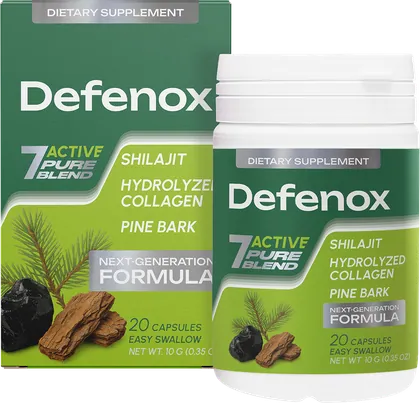
Among the products we review, Defenox capsules contain hydrolyzed fish collagen. Defenox is a dietary supplement designed to support prostate and urinary comfort and everyday vitality in men, and its blend pairs collagen with vitamin C, amla, shilajit and marshmallow root.
This guide is general information, not medical advice. Ask your doctor or pharmacist before starting a new supplement, especially if you take medication, are pregnant or nursing.
Sources
- Wikipedia — Hydrolyzed collagen
- de Miranda R.B. et al. Effects of hydrolyzed collagen supplementation on skin aging: a systematic review and meta-analysis. Int J Dermatol, 2021
- Proksch E. et al. Oral supplementation of specific collagen peptides has beneficial effects on human skin physiology. Skin Pharmacol Physiol, 2014
- Clark K.L. et al. 24-week study on the use of collagen hydrolysate as a dietary supplement in athletes. Curr Med Res Opin, 2008