Ingredient guide
Niacinamide in Skincare: Why Vitamin B3 Is Everywhere
Also known as: nicotinamide, vitamin B3 · By the VitaUSA360 Editorial Team
Quick answer
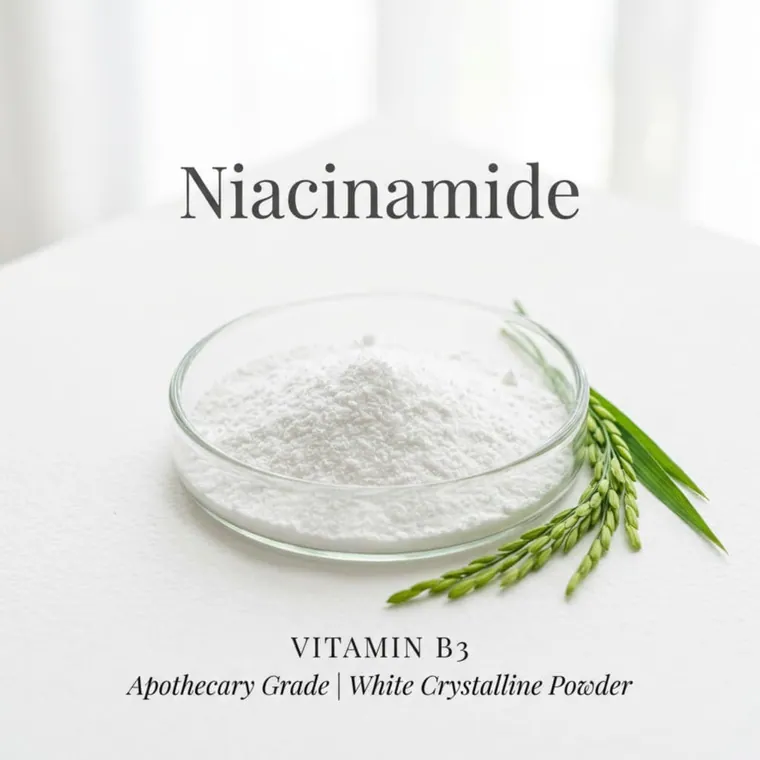
Niacinamide (nicotinamide) is a form of vitamin B3 used in creams and serums to help skin look more even, smooth and resilient. Clinical studies of topical niacinamide have looked at fine lines, uneven tone and texture in aging facial skin. It is well tolerated by most skin types and layers easily with peptides and hyaluronic acid.
| Also called | Nicotinamide, vitamin B3 amide |
|---|---|
| Used for | Even-looking tone, texture, the look of fine lines, skin barrier |
| Typical concentration | Often 2–5% in creams and serums |
| Layers well with | Peptides, hyaluronic acid, sunscreen |
| Tolerance | Generally well tolerated; patch-test if sensitive |
Vitamin B3, skincare edition
In food and supplements, vitamin B3 is a nutrient. In skincare, niacinamide is applied directly to the skin, where it supports the outer barrier and helps the complexion look more uniform.
What studies have looked at
A frequently cited clinical study (Bissett et al., 2005) applied 5% niacinamide to aging facial skin and reported improvements in the appearance of fine lines, blotchiness and texture. Since then niacinamide has become a staple of “anti-aging” and “barrier” products.

Niacinamide benefits backed by research
Niacinamide has one of the strongest research records of any cosmetic vitamin. These are the main points.
A clinical study looked at aging facial skin. In Bissett et al. in Dermatologic Surgery, a 5% niacinamide product applied to facial skin was associated with improvements in the appearance of fine lines, blotchiness, red blotchiness and sallowness. Skin elasticity was also reported to improve.
It is a form of vitamin B3, and the nutrient side is well documented. The NIH Office of Dietary Supplements’ niacin fact sheet lists the recommended intake as 16 mg NE for men and 14 mg NE for women, and explains that niacinamide differs from nicotinic acid because it does not usually cause the flushing associated with high-dose nicotinic acid.
Chemistry and safety are on record. The Nicotinamide entry and the NIH PubChem record describe the compound, its role as a precursor to NAD+ and its long use in skincare and nutrition.
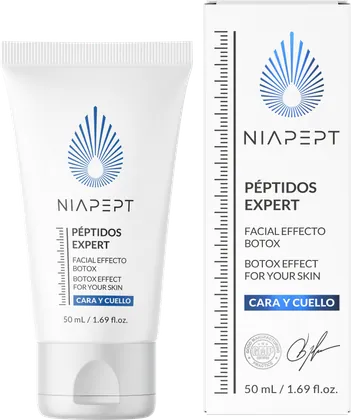
Layering is straightforward. It is commonly formulated with peptides and hyaluronic acid, as in Niapept face and neck cream, which also contains Argireline. The American Academy of Dermatology’s patch-testing guidance is a sensible step for any new product.
How niacinamide works in skin
Niacinamide works by supplying a building block for the coenzymes NAD and NADP, which skin cells use for energy and for making the lipids of the outer barrier.
Skin cells turn over constantly, and that takes energy. Applied topically, niacinamide is converted inside cells into NAD+, a molecule involved in many metabolic reactions. Laboratory research suggests it supports the production of ceramides and other barrier lipids, which is why it is described as a barrier-supporting ingredient and why skin may feel smoother and hold moisture better.
It also appears to influence how pigment is transferred between cells, which is the reason studies measure the look of uneven tone. These are cosmetic effects on appearance, and results vary with concentration, formulation and consistent use over several weeks.
How to use it
Apply to clean skin, morning or evening. Niacinamide plays well with peptides and hyaluronic acid, which is why the three often share a formula. In the daytime, always finish with sunscreen.
Patch testing
Most people tolerate niacinamide well, but any new product can irritate. The American Academy of Dermatology suggests applying it to a small area, such as the inner forearm, for several days before using it on your face.
This guide is general information, not medical advice. Ask your doctor or pharmacist before starting a new supplement, especially if you take medication, are pregnant or nursing.
Sources
- Bissett D.L. et al. Niacinamide: a B vitamin that improves aging facial skin appearance. Dermatol Surg, 2005
- American Academy of Dermatology — How to test skin care products
- NIH Office of Dietary Supplements — Niacin fact sheet for health professionals
- Wikipedia — Nicotinamide
- NIH PubChem — Nicotinamide