Ingredient guide
Zinc: Benefits, Eye Health Role, Supplement Forms and Safety
Also known as: Zinc citrate, zinc gluconate, zinc oxide · By the VitaUSA360 Editorial Team
Quick answer
Zinc is an essential trace mineral used by more than 300 enzymes and by the immune system, skin and eyes. Adults need 11 mg (men) or 8 mg (women) per day, and the tolerable upper intake level is 40 mg. Supplements come as zinc citrate, gluconate, picolinate and other forms; long-term high doses can lower copper.

| Type | Essential trace mineral |
|---|---|
| Adult RDA | 11 mg (men), 8 mg (women) |
| Tolerable Upper Intake Level (UL) | 40 mg per day for adults |
| Daily Value on labels | 11 mg |
| Common supplement forms | Zinc citrate, gluconate, picolinate, acetate, oxide |
| Top food sources | Oysters, beef, pumpkin seeds, legumes, nuts |
| Key pairing | Long-term intake is usually balanced with copper |
What is zinc?
Zinc is an essential mineral, meaning the body needs it but cannot make it. It is a building block of more than 300 enzymes and takes part in protein synthesis, DNA synthesis, wound repair, taste and smell, and the normal working of the immune system. You will find the chemistry background in the Wikipedia article on zinc.
The body holds only small amounts, so a steady daily intake matters. Groups who may need to pay closer attention to intake include vegetarians, whose diets rely on plant sources that bind zinc, older adults with smaller appetites, and people with digestive conditions that limit absorption.
The NIH Office of Dietary Supplements sets the adult RDA at 11 mg for men and 8 mg for women, rising to 11 mg in pregnancy and 12 mg during breastfeeding.
Zinc benefits backed by research
Zinc is one of the most studied minerals. Three findings stand out.
1. Colds. A Cochrane review (Singh and Das) found that zinc lozenges or syrup, started within 24 hours of the first symptoms, were associated with shorter colds. The authors point out that doses, forms and trial quality varied between studies.
2. Lozenge form and dose. A meta-analysis (Hemilä, JRSM Open) compared zinc acetate and zinc gluconate lozenges and found that the benefit on cold duration appeared at higher daily doses taken as lozenges. That is a short-term, specific use, not the same as a daily maintenance capsule.
3. Eye research. In the Age-Related Eye Disease Study (AREDS Research Group), the antioxidant formula that included zinc and copper was associated with a lower risk of progression to advanced age-related macular degeneration in people with intermediate disease. The follow-up AREDS2 trial (AREDS2 Research Group) kept zinc in the formula and tested lutein and zeaxanthin as additions.
Zinc also supports normal skin and wound repair processes, which is why dermatology textbooks discuss it, and taste and smell are known to depend on adequate zinc status.

Does zinc help the eyes?
Zinc is found in high concentrations in the retina and the choroid, the vascular layer behind it. It is involved in the way the eye uses vitamin A: zinc supports the enzyme that converts retinol into retinal, a pigment needed for vision in dim light. That is why zinc and vitamin A appear together in many eye-support formulas.
The AREDS and AREDS2 formulas also helped shape how supplement makers think about eye nutrients: vitamin C, vitamin E, zinc, copper, and later lutein and zeaxanthin. If you want the full story, read our explainer on the AREDS2 eye vitamins and our guide to lutein and zeaxanthin.
One practical point: the zinc amount in AREDS-type formulas is much higher than the daily RDA, which is why those formulas are meant to be taken with advice from an eye-care professional.
Food sources and how to read zinc on a label
Oysters are the richest source, with several times the daily need in a single serving. Beef, crab, pork, pumpkin seeds, cashews, chickpeas, lentils, oats and fortified breakfast cereals are everyday sources as well. Zinc from animal foods is absorbed more readily than zinc from whole grains and legumes, because phytates in plant foods bind some of the mineral.
Reading a label. Supplement Facts will show “Zinc (as zinc citrate)” or a similar line, in milligrams of elemental zinc. This matters: a 30 mg zinc citrate capsule is not 30 mg of zinc, because the label should list the elemental amount. Look for the % Daily Value (based on 11 mg).
Zinc citrate is a well-tolerated, mildly tasting form that is used in many multivitamin and eye-support products, including UpVizol. Other forms such as gluconate, picolinate and acetate are also common.
Zinc safety, side effects and interactions
Zinc is safe at the recommended intake. The tolerable upper intake level for adults is 40 mg per day from all sources. Higher doses can cause nausea, vomiting, stomach cramps and a metallic taste.
The more important long-term issue is copper. Taking high doses of zinc for many weeks can reduce copper absorption and may lead to copper deficiency. This is why long-term high-zinc products usually include a small amount of copper, and why the NIH Office of Dietary Supplements advises staying under the upper limit unless a clinician says otherwise.
Zinc can bind to some medicines and lower how much of them you absorb. Quinolone and tetracycline antibiotics and the drug penicillamine are examples, so doses are usually separated by several hours. Intranasal zinc products have been linked by the FDA to a loss of smell and should not be confused with oral supplements. Supplements are not intended to treat or prevent disease.
A practical tip: take zinc with food if it upsets your stomach, and keep it away from calcium and iron supplements taken at the same moment, since minerals can compete for absorption. Add up zinc from every source, including multivitamins and any lozenges, before deciding how much a new supplement adds.
Which products we review contain zinc?
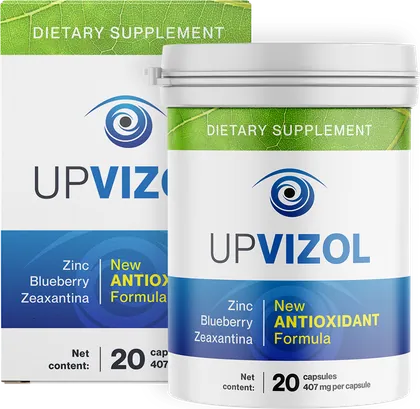
Among the products on this site, UpVizol capsules contain zinc as zinc citrate, together with lutein, zeaxanthin, blueberry extract, ginkgo and vitamins A, C and E. The amount per capsule is printed on the Supplement Facts panel.
Related guides: vitamin A, vitamin C, vitamin E, ginkgo biloba and lutein and zeaxanthin.
This guide is general information, not medical advice. Ask your doctor or pharmacist before starting a new supplement, especially if you take medication, are pregnant or nursing.
Sources
- Wikipedia — Zinc
- NIH Office of Dietary Supplements — Zinc fact sheet
- MedlinePlus — Zinc in diet
- Singh M, Das RR. Zinc for the common cold. Cochrane Database Syst Rev
- Hemilä H. Zinc lozenges and the common cold: a meta-analysis. JRSM Open
- AREDS Research Group. High-dose vitamins C and E, beta carotene and zinc for age-related macular degeneration. Arch Ophthalmol
- AREDS2 Research Group. Lutein + zeaxanthin and omega-3 fatty acids for age-related macular degeneration. JAMA