Ingredient guide
French Maritime Pine Bark Extract: A Plain-English Guide to Pinus pinaster
Also known as: French maritime pine bark, Pinus pinaster, Pycnogenol · By the VitaUSA360 Editorial Team
Quick answer
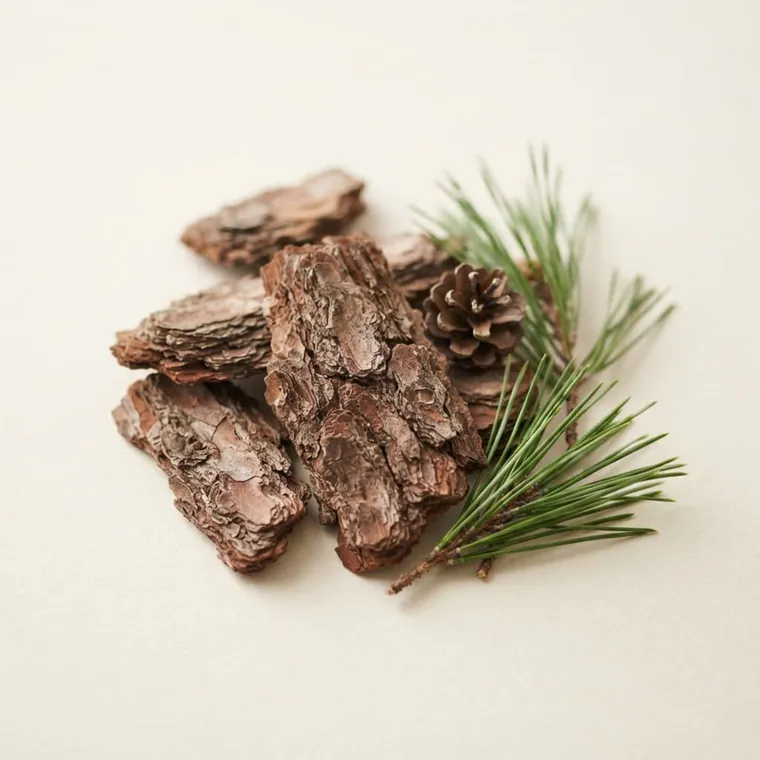
Pine bark extract is a water-based extract of the bark of the French maritime pine, Pinus pinaster, a tree that grows along the Atlantic coast of southwest France. It is rich in procyanidins and other polyphenols with antioxidant activity. Pycnogenol is the best-known branded version, and it has been studied in dozens of placebo-controlled trials on circulation, skin and everyday wellness. It is generally well tolerated.
| Source | Bark of the French maritime pine (Pinus pinaster) |
|---|---|
| Grows in | Coastal forests of southwest France (Landes) |
| Key compounds | Procyanidins (proanthocyanidins), catechin, phenolic acids |
| Best-known brand | Pycnogenol |
| Studied for | Circulation, endothelial function, skin, everyday wellness |
| Typical forms | Capsules, tablets, combination formulas |
What is pine bark extract?
Pine bark extract is made by grinding the outer bark of the French maritime pine (Pinus pinaster) and extracting it with water. The tree grows in the large coastal forests of the Landes region in southwest France, and the bark is a by-product of the timber industry. You can read about the tree in the Wikipedia article on Pinus pinaster.
Many people search for it under its brand name, Pycnogenol, a standardized French maritime pine bark extract that has been on the market for decades. Other pine bark extracts exist too, and on labels they are often called simply “pine bark extract” or “maritime pine bark extract”. Background on the brand is in the Wikipedia article on Pycnogenol.
What are procyanidins, the key compounds in pine bark?
The main active compounds in pine bark extract are procyanidins, also called oligomeric proanthocyanidins. They are chains of catechin and epicatechin units, the same family of polyphenols found in grape seeds, cocoa and apples. Pine bark extract also contains phenolic acids such as ferulic and caffeic acid.
These polyphenols are strong antioxidants in laboratory tests. In human studies, researchers have focused on how they may help support the lining of blood vessels (the endothelium), healthy blood flow and the skin’s supporting matrix.

Pine bark extract benefits backed by research
Pine bark extract is one of the most studied botanical extracts, with a long list of human trials. Here is what the main reviews describe.
- Dozens of placebo-controlled trials. A review in Frontiers in Nutrition (Weichmann and Rohdewald) summarized 39 randomized, double-blind, placebo-controlled trials of Pycnogenol with about 2,000 participants. The trials lasted from two weeks to six months and looked at cardiovascular health, venous circulation in the legs, cognition, joint comfort, skin, eye health and sports performance. See it on PubMed.
- Blood-vessel function. The same review describes findings on endothelial function, the ability of blood vessels to relax and widen, which is a key reason pine bark extract appears in circulation and men’s vitality formulas.
- An independent Cochrane review. A Cochrane review (Robertson et al.) pooled 27 randomized trials of pine bark extracts across a range of chronic health conditions, found the extract was generally well tolerated, and noted that larger, longer studies would help clarify the results. See it on PubMed.
In everyday terms, pine bark extract is valued as an antioxidant that may help support healthy circulation, and research in several areas is ongoing.
How does pine bark extract appear on a label?
Look for French maritime pine bark extract, maritime pine bark extract or the Latin name Pinus pinaster (sometimes written Pinus pinaster ssp. atlantica). A product using the branded extract will say Pycnogenol with a registered trademark sign. Many standardized extracts state a procyanidin content, for example a percentage on the Supplement Facts panel.
In multi-ingredient capsules, pine bark extract is often part of a blend. That is normal; it simply means the formula lists the blend weight rather than each ingredient separately.
Pine bark extract safety and interactions
Pine bark extract has been well tolerated in most human trials. When side effects are reported, they are usually mild: stomach upset, dizziness or headache. Taking it with or after a meal can help with stomach comfort.
- Blood thinners. Because it may affect platelets, ask a clinician before using it with warfarin, aspirin or other anticoagulant or antiplatelet medicines.
- Blood sugar and blood pressure. If you take medication for blood sugar or blood pressure, check with your clinician first.
- Immune-suppressing medicines. Ask before combining it with these medicines.
- Surgery. Stop two weeks before a planned procedure unless your clinician says otherwise.
- Pregnancy and nursing. Ask a clinician first.
Supplements are not a substitute for medical care, and this page is general information, not advice for your situation.
Which products we review contain pine bark extract?
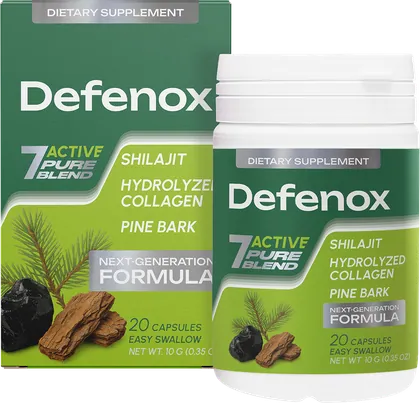
Among the products we review, Defenox contains French maritime pine bark extract (Pinus pinaster). Defenox is a capsule supplement designed to support prostate and urinary comfort and everyday vitality in men. Its blend also includes shilajit, amla fruit extract and vitamin C, another antioxidant that works well alongside polyphenols. For context on the category, read our prostate health supplements guide.
This guide is general information, not medical advice. Ask your doctor or pharmacist before starting a new supplement, especially if you take medication, are pregnant or nursing.
Sources
- Wikipedia — Pinus pinaster
- Wikipedia — Pycnogenol
- Weichmann F., Rohdewald P. Pycnogenol French maritime pine bark extract in randomized, double-blind, placebo-controlled human clinical studies. Front Nutr, 2024
- Robertson N.U. et al. Cochrane review of pine bark (Pinus spp.) extract in chronic disorders. Cochrane Database Syst Rev, 2020