Ingredient guide
MSM (Methylsulfonylmethane): The Sulfur Compound in Joint Formulas
Also known as: Methylsulfonylmethane · By the VitaUSA360 Editorial Team
Quick answer
MSM, or methylsulfonylmethane, is an organic sulfur compound found in small amounts in some foods and made synthetically for supplements. It is one of the most common ingredients in joint-support products, often alongside glucosamine and chondroitin. A 2017 scientific review described MSM as well tolerated at commonly used amounts.

| Chemical name | Methylsulfonylmethane (dimethyl sulfone) |
|---|---|
| Found in | Small amounts in some fruits, vegetables, grains and milk |
| Supplement form | White crystalline powder in capsules or tablets |
| Why sulfur matters | Sulfur is part of connective-tissue molecules |
| Common pairings | Glucosamine, chondroitin, Boswellia, vitamin C |
What MSM is
MSM is a small, odorless molecule that delivers sulfur — an element the body uses to build several structural molecules, including those in cartilage and connective tissue. It occurs naturally in foods, but in very small amounts, which is why supplements use a purified form.
Why it is so common in joint products
MSM has been studied in small trials on joint comfort and on recovery after exercise, often combined with glucosamine. A review published in Nutrients (Butawan et al., 2017) summarizes this research and describes MSM’s safety record as favorable.

MSM benefits backed by research
MSM is a simple molecule with a surprisingly large body of literature. These are the main findings worth knowing.
A published review describes it as well tolerated. The review in Nutrients (Butawan et al.) gathered animal, human and safety data on MSM. It reports that amounts commonly used in studies were well tolerated, and it covers small trials in joint comfort and exercise recovery.
The chemistry is straightforward. MSM is dimethyl sulfone, a small compound that supplies sulfur. The NIH PubChem record for dimethyl sulfone lists its structure and properties, and the Methylsulfonylmethane entry explains where it occurs in nature, including in small amounts in plants, milk and the human body.
Sulfur is a building block. The body uses sulfur-containing amino acids such as methionine and cysteine to build proteins found in connective tissue, hair, skin and nails. That is the background reason MSM is discussed alongside collagen and joint nutrition.
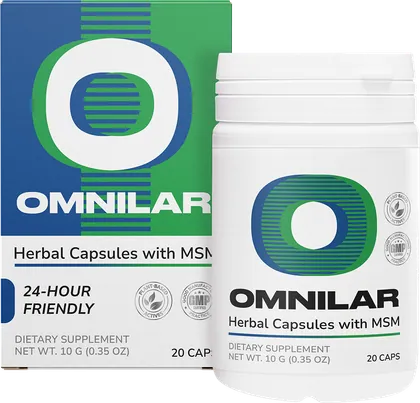
Research is still developing. Most human trials are small and short, and studies use a range of amounts, usually in the gram range per day. Larger trials would help refine the picture. In the meantime, MSM remains a common, widely available ingredient that formulators combine with Boswellia and Devil’s Claw in joint-support products such as Omnilar capsules.
How to read it on a label
It may appear as “MSM”, “methylsulfonylmethane” or under a branded name. In combination formulas, MSM is often one of the larger ingredients by weight, because it is used in gram-range amounts in many studies.
Safety notes
MSM is generally well tolerated. Occasional side effects include mild stomach upset, bloating or headache. As with any supplement, pregnant and nursing women and people on prescription medication should ask a clinician first.
This guide is general information, not medical advice. Ask your doctor or pharmacist before starting a new supplement, especially if you take medication, are pregnant or nursing.