Ingredient guide
Camphor (Cinnamomum camphora): What It Does in Cooling Gels and Rubs
Also known as: Cinnamomum camphora, camphor laurel · By the VitaUSA360 Editorial Team
Quick answer
Camphor is a waxy, strong-smelling compound that comes from the wood of the camphor laurel tree, Cinnamomum camphora, and can also be made synthetically. In topical gels, rubs and balms it creates a cool, tingling sensation that many people find soothing on tired muscles and joints. It is for use on intact skin only: camphor is toxic if swallowed and must be kept away from children.
| Source | Wood of the camphor laurel tree (Cinnamomum camphora), or synthetic |
|---|---|
| Chemistry | A waxy terpenoid ketone with a penetrating aroma |
| Feel on skin | Cooling, tingling, then a mild warm afterglow |
| Found in | Cooling gels, chest rubs, balms, liniments |
| Used how | Externally only, on intact skin, in finished products |
| Key safety point | Toxic if swallowed; keep away from children |
What is camphor?
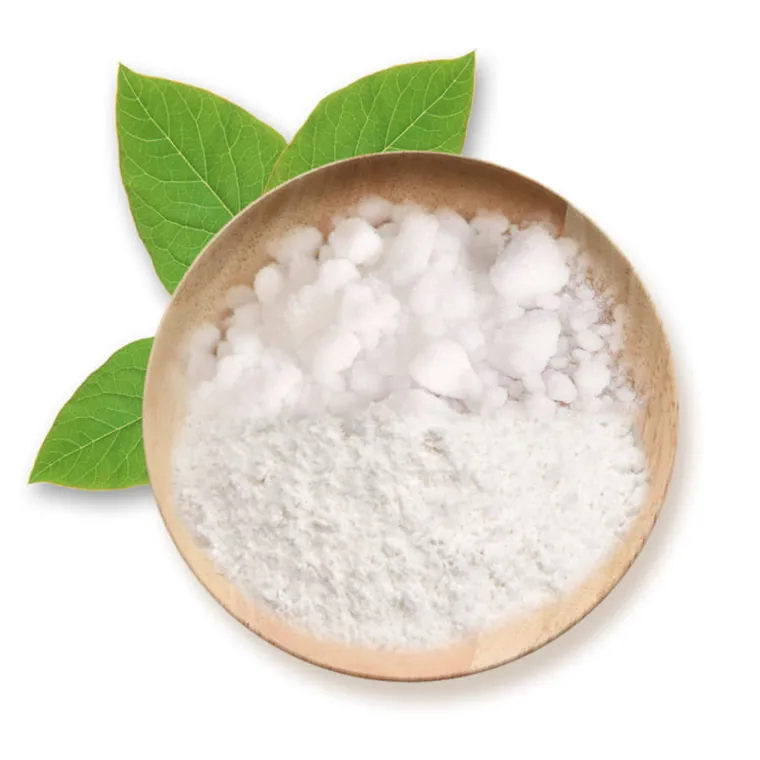
Camphor is a white, crystalline, waxy substance with a sharp, medicinal aroma. It is a terpenoid, a family of aromatic plant compounds, and it is traditionally obtained by steam-distilling chips of wood from the camphor laurel (Cinnamomum camphora), an evergreen tree native to East Asia. Today much of the camphor on the market is made synthetically, and both versions are chemically the same molecule.
People have used camphor for centuries in ointments, incense and cabinets that keep fabrics fresh. In modern personal care it is best known as a classic ingredient in cooling gels, chest rubs and muscle balms. You can read the general background in the Wikipedia article on camphor.
The camphor laurel is also the source of a family of aromatic oils, and the leaf and wood oils are sorted into fractions by how they smell and what they contain. The crystals you see in a bowl, like the ones in the photo above, are the purified solid.
Camphor benefits backed by research
Research on camphor focuses mostly on how it acts on the skin’s sensory nerves, which explains the cooling and soothing feel people describe. Here are three specific findings.
- It acts on heat- and cold-sensing channels. A laboratory study in the Journal of Neuroscience (Xu et al.) found that camphor activates the TRPV1 channel, a receptor involved in sensing warmth, and then desensitizes it. The authors noted that this resembles how other topical sensory agents work. Read the abstract on PubMed.
- It belongs to a long-used class of topical agents. A review of topical products in Postgraduate Medicine (Barkin) describes counterirritants such as camphor and menthol as a long-standing category of over-the-counter rubs, applied to create a sensation that competes with discomfort. See it on PubMed.
- Its safety profile has been mapped. An evidence-based guideline from the American Association of Poison Control Centers (Manoguerra et al.) reviewed national data on camphor exposures and set clear thresholds for when a swallowed amount needs medical attention. That guideline is the reason camphor labels carry strict keep-away-from-children warnings. See it on PubMed.
In everyday terms, camphor’s value in a rub is the comfort and soothing feel of the cool, fresh sensation it creates. It is not a treatment for any condition, and larger human studies on camphor alone are still limited.

How is camphor used in cooling gels, rubs and balms?
Camphor is used in topical products as a counterirritant: an ingredient that produces a distinct skin sensation, such as cool, tingle or warmth, that draws attention away from a stiff or tired feeling underneath. Menthol, eucalyptus oil, and camphor are the classic cooling trio. Capsaicin, ginger and cinnamon oil sit on the warming side.
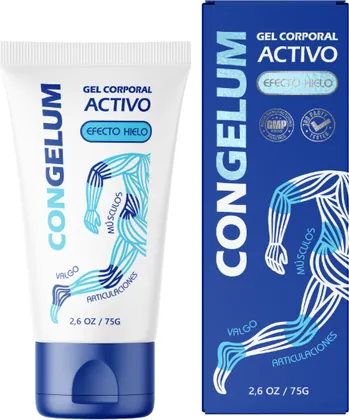
Cooling feel. In a gel, camphor typically arrives with a crisp, icy sensation, followed by a mild afterglow as the skin readjusts. That is why it is a natural fit for a post-workout gel such as Congelum, which pairs camphor with eucalyptus, rosemary and cassia oils, plus urea and vitamin E.
Warming feel. Camphor is less common in warming balms, which lean on ginger, cinnamon and rosemary. If you like heat on stiff mornings, see our guide to ginger and the eucalyptus oil page for another fresh note that appears in both families.
For application, finished products are made for thin layers: smooth it on the skin over the area, massage until absorbed, then wash your hands. Do not cover the area with a tight bandage or a heating pad unless the label says you can.
How to spot camphor on a label
On an ingredient list, look for Camphor (sometimes Cinnamomum camphora or Cinnamomum camphora bark oil), often followed by the strength. US over-the-counter topical products usually state camphor as an active ingredient with a percentage, and the Drug Facts panel lists the purpose, such as an external analgesic.
Cosmetic gels and balms that do not carry a Drug Facts panel list camphor within the inactive or ingredient list, in descending order of amount. Synonyms you may see: 2-bornanone and Cinnamomum camphora leaf oil.
A quick label checklist helps. Confirm the product is labelled for external use only, check the stated strength if there is one, and look for a child-resistant closure or a keep-out-of-reach warning. Our Congelum review lists the full ingredient set of that gel.
Camphor safety, side effects and interactions
Camphor is safe to use on the skin when you follow the label, but it is toxic if swallowed. Even small amounts can cause serious poisoning in young children, with symptoms that can include vomiting, drowsiness and seizures. Keep every camphor product out of reach, and call Poison Control at 1-800-222-1222 right away if anyone swallows it.
- Skin only. Use on intact skin. Do not apply to broken, irritated or sunburned skin, wounds or rashes.
- Keep away from eyes and mucous membranes such as the nose, mouth and genitals.
- Children. Do not use camphor products on babies or young children unless a pediatrician says so, and never place camphor products near the nose or face of a child.
- No tight wraps or heat. Avoid bandaging tightly or applying a heating pad over the product, which may increase absorption and irritation.
- Patch test. If you have sensitive skin or fragrance allergies, try a small area first and wait a day.
- Pregnancy and nursing. Ask a clinician first.
- Stop use if you notice redness, itching, a burning feeling or a rash.
For essential-oil safety in general, see the NCCIH page on aromatherapy and the Poison Control guidance on essential oils. Ask a pharmacist if you use other topical products on the same area.
Which products we review contain camphor?
Among the products we review, Congelum is the cooling body gel built around camphor, together with eucalyptus oil and rosemary oil. It is a topical gel, not a supplement. To understand its supporting cast, read about rosemary oil and eucalyptus oil, or compare it with a warming balm in our Congelum vs Motion Energy comparison.
This guide is general information, not medical advice. Ask your doctor or pharmacist before starting a new supplement, especially if you take medication, are pregnant or nursing.
Sources
- Wikipedia — Camphor
- NCCIH — Aromatherapy (essential oil safety)
- Poison Control — Essential oils: poisonous when misused
- Xu H. et al. Camphor activates and strongly desensitizes TRPV1. J Neurosci
- Barkin R.L. The pharmacology of topical analgesics. Postgrad Med
- Manoguerra A.S. et al. Camphor poisoning: an evidence-based practice guideline. Clin Toxicol