Buyer’s guide
Green Tea, Matcha and Weight Management: A Practical Guide
By the VitaUSA360 Editorial Team
The short answer
Green tea contains catechins, especially EGCG, together with caffeine, and studies suggest this pair may modestly increase daily energy expenditure and fat oxidation. The NCCIH describes the effect on body weight as modest. Green tea and matcha work best as a smart swap for sugary drinks within a balanced diet and an active day.
Does green tea help with weight loss?
Green tea can be a helpful partner in weight management. Its catechins and caffeine are associated with a small increase in the calories the body uses, and the biggest everyday benefit is that unsweetened tea replaces higher-calorie drinks.
The NCCIH states that the catechins and caffeine in green tea and its extracts may have a modest effect on body weight. That is a fair, realistic way to see it: green tea supports a plan built on food choices, activity and sleep.
What are catechins and EGCG?
Catechins are polyphenols, plant compounds found in high amounts in the leaves of Camellia sinensis, the tea plant. The most abundant is epigallocatechin gallate, or EGCG.
Green tea keeps more catechins than black tea because its leaves are steamed or pan-fired soon after picking, which stops oxidation. Matcha goes a step further: the whole leaf is stone-ground into powder, so you drink the leaf itself rather than an infusion. Our matcha ingredient page explains how shade-growing shapes its profile.
What does research say about green tea and metabolism?
Research suggests that catechins and caffeine together may nudge energy expenditure and fat oxidation upward.
- In a small study by Dulloo et al., healthy young men who took a green tea extract rich in catechins and caffeine showed higher 24-hour energy expenditure and fat oxidation than with placebo, measured in a respiratory chamber (PubMed).
- A meta-analysis by Hursel et al. pooled trials of catechin–caffeine mixtures and reported a small positive effect on weight loss and weight maintenance, with results influenced by habitual caffeine intake and ethnicity (PubMed).
Results vary from person to person, and larger studies continue. The most consistent message is that green tea works alongside, not instead of, diet and activity.

Is matcha good for weight loss?
Matcha is a smart choice for people managing their weight because it delivers the catechins and caffeine of the whole tea leaf with almost no calories when made with water.
Its practical strengths are simple:
- a plain cup replaces a sweetened coffee drink or soda;
- the caffeine and L-theanine combination supports steady energy for a walk or a workout;
- a warm drink between meals can make an afternoon snack easier to skip.
Watch the add-ins. A large café matcha latte with syrup can carry as many calories as a dessert. Unsweetened milk or plain water keeps it light.
How does a matcha drink fit a balanced diet?
Think of matcha as one easy habit inside a bigger plan.
- Plate: half vegetables and fruit, a quarter lean protein, a quarter whole grains.
- Drinks: water, unsweetened tea and matcha instead of sugary drinks.
- Activity: U.S. guidelines suggest at least 150 minutes a week of moderate activity, such as brisk walking, plus muscle-strengthening twice a week.
- Sleep: seven or more hours supports appetite control.
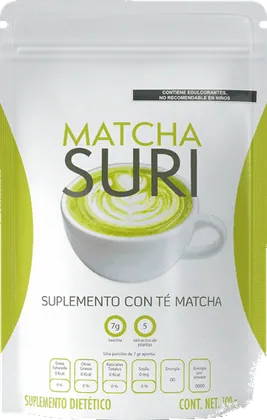
Matcha Suri is an instant drink with matcha tea extract and spirulina, designed to support weight-management goals and everyday energy as part of a balanced diet and an active life. You stir 1 teaspoon into a glass (150 ml, about 5 fl oz) of hot water once a day. It contains sweeteners and is not intended for children. Spanish speakers can read the Spanish version of the Matcha Suri page.
Are green tea extract capsules safe?
Brewed green tea and matcha drinks are food-like uses that most adults enjoy safely. Concentrated green tea extract capsules are different, because they deliver much larger amounts of catechins at once.
The NCCIH notes that, although uncommon, liver injury has been reported in some people who used green tea products, mainly extracts in tablet or capsule form. If you choose an extract, take it with food, stay within the label dose, and stop and call your doctor if you notice dark urine, yellowing skin or eyes, or abdominal pain.
Also count the caffeine. People who are pregnant, breastfeeding, sensitive to caffeine or taking medicine for the heart or blood pressure should ask a clinician first. Our article on matcha vs coffee compares caffeine levels.
How much green tea or matcha should you drink a day?
For most healthy adults, a few cups of brewed green tea or one to two servings of matcha a day fit comfortably within sensible caffeine limits.
The FDA cites 400 mg of caffeine a day as an amount not generally associated with negative effects for most adults, and it lists about 37 mg in a 12-ounce cup of brewed green tea. Matcha has more per cup because you drink the whole leaf, so count it closer to a small coffee.
Consistency matters more than quantity. One cup that replaces a sugary drink every day does more for your goals than several cups now and then. Drink it earlier in the day if caffeine affects your sleep, since good sleep supports appetite control too.
What is spirulina and why is it paired with matcha?
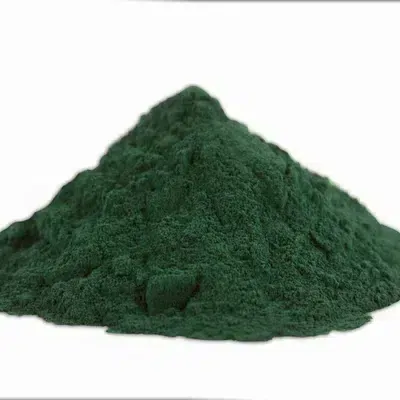
Spirulina is a blue-green microalga (a cyanobacterium, Arthrospira) that is dried into a deep-green powder. It is known for its protein content and for phycocyanin, the blue pigment that gives it its color.
In drinks, spirulina adds color, a savory note and a nutrient boost that pairs naturally with matcha’s grassy taste. Choose products from reputable makers that test their ingredients for purity. Read more on our spirulina page.
General information only — not medical advice. Talk to your doctor or pharmacist about your situation.
Sources
- NCCIH — Green Tea
- Dulloo A.G. et al. Efficacy of a green tea extract rich in catechin polyphenols and caffeine in increasing 24-h energy expenditure and fat oxidation in humans. Am J Clin Nutr, 1999
- Hursel R. et al. The effects of green tea on weight loss and weight maintenance: a meta-analysis. Int J Obes, 2009
- NIH Office of Dietary Supplements — Dietary Supplements for Weight Loss
- Wikipedia — Epigallocatechin gallate
More guides
- Prostate Supplements: What Is Inside and How to Choose One
- Nocturia in Men: Why You Wake Up to Urinate and What Helps
- Seven Foods Men Can Eat for Prostate Wellness
- Parasite Cleanse Explained: Herbal Formulas, Doctor Testing and Prevention
- How to Ease Bloating and Support Healthy Digestion
- Matcha or Coffee? A Side-by-Side Look at Your Morning Cup
- Making Matcha at Home: Step-by-Step for Every Style
- Joint Supplements Explained: Nine Ingredients and What Studies Say
- Glucosamine, Chondroitin, MSM and Boswellia: A Fair Comparison
- Why Are My Joints Stiff in the Morning, and What Can Help?
- Vitamin C for Collagen: How Your Body Builds It
- AREDS2 and Eye Vitamins: What the Research Studied, in Plain English
- Digital Eye Strain: Why Screens Tire Your Eyes and What Helps
- How Supplements Are Regulated in the U.S. and What Third-Party Testing Means
- Cold or Heat for Sore Muscles: A Practical Guide
- Sore After a Workout? What Muscle Soreness Is and How to Ease It
- How Muscle Rubs Work: A Plain-English Guide to Topical Relief
- Peptides in Skin Care: What They Are and How They Are Used
- Skin Care After 50: What Changes and What to Look For
- How to Read a Supplement Facts Label in Five Minutes
- Supplements and Medications: Five Interactions Worth Checking
- Ordering Supplements Online: A Practical Buyer’s Checklist