Ingredient guide
Wormwood: The Bitter Herb Behind Digestive Bitters and Cleanse Blends
Also known as: Artemisia absinthium, common wormwood, absinthe wormwood · By the VitaUSA360 Editorial Team
Quick answer
Wormwood (Artemisia absinthium) is a silvery, intensely bitter herb from the daisy family whose leaves and flowering tops have been used for centuries in digestive bitters, aperitifs such as vermouth, and herbal cleanse formulas. Its bitterness comes from compounds such as absinthin, and its aromatic oil contains thujone. In finished products it is used in small, measured amounts, and it is not for pregnancy, breastfeeding or people with seizure disorders.
| Plant part | Leaves and flowering tops (aerial parts) |
|---|---|
| Plant family | Daisy family (Asteraceae) |
| Key compounds | Bitter sesquiterpene lactones such as absinthin and artabsin; an essential oil containing thujone |
| Taste | Among the most bitter of all culinary and herbal plants |
| Traditional uses | Digestive bitters, aperitifs such as vermouth, herbal cleanse formulas |
| Key safety point | Contains thujone; not for pregnancy, breastfeeding or seizure disorders |
What is wormwood?
Wormwood is a hardy perennial herb, Artemisia absinthium, native to Europe, North Africa and western Asia. It grows as a bushy plant with feathery, silver-gray leaves and small yellow flower heads, and the whole plant carries a sharp, sage-like aroma. Background on the plant is in the Wikipedia article on Artemisia absinthium.
The part used in herbal products is the aerial part: the leaves and flowering tops, harvested and dried. Two groups of compounds define it. The first are bitter sesquiterpene lactones, especially absinthin and artabsin, which give wormwood its famous bitterness. The second is a small amount of essential oil that contains thujone, a compound that matters for safety (see below).
Wormwood is best known as the herb that gave its name to absinthe, and the word vermouth comes from the German name for the plant, Wermut. Both drinks were born from the European habit of taking a bitter aperitif before a meal.
Wormwood benefits backed by research and tradition
Wormwood’s main role, both historically and today, is as a bitter for digestion. Here is what the research and the traditional record say.
- A classic digestive bitter. Bitter herbs are traditionally taken before meals to wake up the appetite and support the body’s own digestive secretions. The European Medicines Agency’s herbal committee lists wormwood as a traditional herbal medicine for temporary loss of appetite and mild digestive complaints, based on long-standing use.
- A well-mapped plant. A broad review in Plants (Szopa et al.) traces wormwood from ancient medicine to modern phytochemistry, cataloguing its bitter lactones, flavonoids and essential-oil compounds, and its uses in herbal practice, cosmetics and cuisine. See it on PubMed.
- A plant of active research interest. Wormwood has been explored in a small double-blind study in people with Crohn’s disease (Omer et al.), and laboratory studies have looked at its antioxidant and neuroprotective properties. A commentary in the Journal of Ethnopharmacology (Lachenmeier) calls these results promising and worth further investigation, alongside careful attention to thujone levels. See it on PubMed.
You may also read about artemisinin. That compound comes from a cousin plant, sweet wormwood (Artemisia annua), and its discovery by Tu Youyou earned a share of the Nobel Prize in Physiology or Medicine. Artemisinin-based medicines are prescription drugs, and that research belongs to Artemisia annua rather than to common wormwood. See the Wikipedia article on Artemisia annua.

Why is wormwood used in herbal cleanse formulas?
Wormwood appears in herbal cleanse formulas because of its long tradition as a bitter digestive herb. In European and Middle Eastern herbal practice, bitter plants were taken to support appetite, digestion and a feeling of lightness after heavy meals, and wormwood was the strongest of them.
In a modern blend, wormwood is rarely used alone. Formulators pair it with warming and supporting botanicals: turmeric, the golden spice of Indian cooking; celery, a traditional digestive and cleansing plant; gotu kola, an Ayurvedic tonic herb; and amla, the vitamin-C-rich Indian gooseberry. Together they give a rounded botanical profile rather than one dominant herb.
For everyday comfort tips that go alongside any digestive supplement, see our guide to bloating and digestion and the digestive wellness section.
How does wormwood appear on a supplement label?
On a label, look for Wormwood, Artemisia absinthium, or sometimes just Artemisia, usually with the plant part (herb, leaf or aerial parts) and either a powder or an extract weight. In multi-herb capsules it is often listed inside a named blend or biocomplex.
Wormwood also appears in liquid digestive bitters, where a few drops go into water before a meal, and in herbal teas, where its bitterness is usually softened with mint or fennel. In the US, wormwood may flavor foods and drinks only when the finished product is essentially thujone-free, which is why absinthe sold here is tested for it.
With any wormwood product, follow the directions on the package. Finished capsule products are designed around a set daily amount, and that is the amount to stay with.
Wormwood safety, side effects and interactions
Wormwood is used safely in small amounts in finished products, but its essential oil contains thujone, a compound that can affect the nervous system at high intakes. That is why reader-safety rules for wormwood are clear. Background on the compound is in the Wikipedia article on thujone.
- Pregnancy and breastfeeding. Do not use wormwood.
- Seizure disorders. People with epilepsy or a history of seizures should avoid it, and so should anyone taking medicine that lowers the seizure threshold.
- Stay with the directions. Avoid long-term high-dose use outside a finished product’s directions, and never take pure wormwood essential oil by mouth.
- Allergy. People allergic to ragweed, marigolds, daisies or other plants in the daisy family may react to wormwood.
- Gallbladder, kidney conditions and medicines. If you have gallstones, a kidney condition or take prescription medicine, ask a clinician before use.
- Children. Keep wormwood products away from children.
A dietary supplement is not a medicine and does not replace treatment from your doctor. If you have ongoing digestive symptoms, see a clinician.
Which products we review contain wormwood?
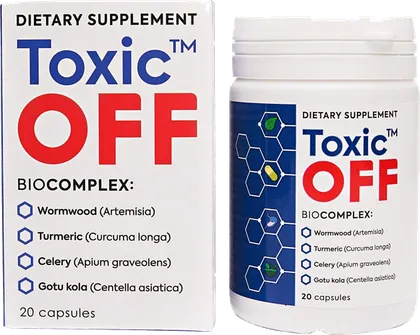
Among the products we review, Toxic OFF lists wormwood (Artemisia) first in its botanical biocomplex. Toxic OFF is a botanical cleanse formula designed to support digestion and the body’s natural cleansing, with one capsule a day. Its other botanicals are turmeric, celery, gotu kola and amla. Read the full Toxic OFF overview for its directions and ingredient list.
This guide is general information, not medical advice. Ask your doctor or pharmacist before starting a new supplement, especially if you take medication, are pregnant or nursing.
Sources
- Wikipedia — Artemisia absinthium
- Wikipedia — Thujone
- Szopa A. et al. Artemisia absinthium L. — importance in the history of medicine, phytochemistry and uses. Plants (Basel), 2020
- Lachenmeier D.W. Wormwood (Artemisia absinthium L.) — a curious plant with both neurotoxic and neuroprotective properties? J Ethnopharmacol, 2010
- Wikipedia — Artemisia annua (sweet wormwood)