Ingredient guide
Amla, the Indian Gooseberry: What Phyllanthus emblica Brings to a Formula
Also known as: Indian gooseberry, Phyllanthus emblica, Emblica officinalis, emblica · By the VitaUSA360 Editorial Team
Quick answer
Amla is the small, sour, green fruit of the Indian gooseberry tree, Phyllanthus emblica, also known as Emblica officinalis. It is naturally rich in vitamin C and in hydrolyzable tannins such as emblicanins, which give it strong antioxidant capacity. In randomized trials, amla extract has been studied for blood-vessel function and markers of oxidative stress. It has a long history in Ayurveda and is well tolerated as a food and supplement.
| Plant part | Fruit |
|---|---|
| Native to | India and Southeast Asia |
| Key compounds | Vitamin C, emblicanins and other hydrolyzable tannins, gallic acid, ellagic acid |
| Traditional use | Ayurvedic rasayana; a key fruit in triphala |
| Studied for | Antioxidant capacity, endothelial function, lipid markers |
| Label names | Amla, emblica, Phyllanthus emblica, Emblica officinalis |
What is amla?
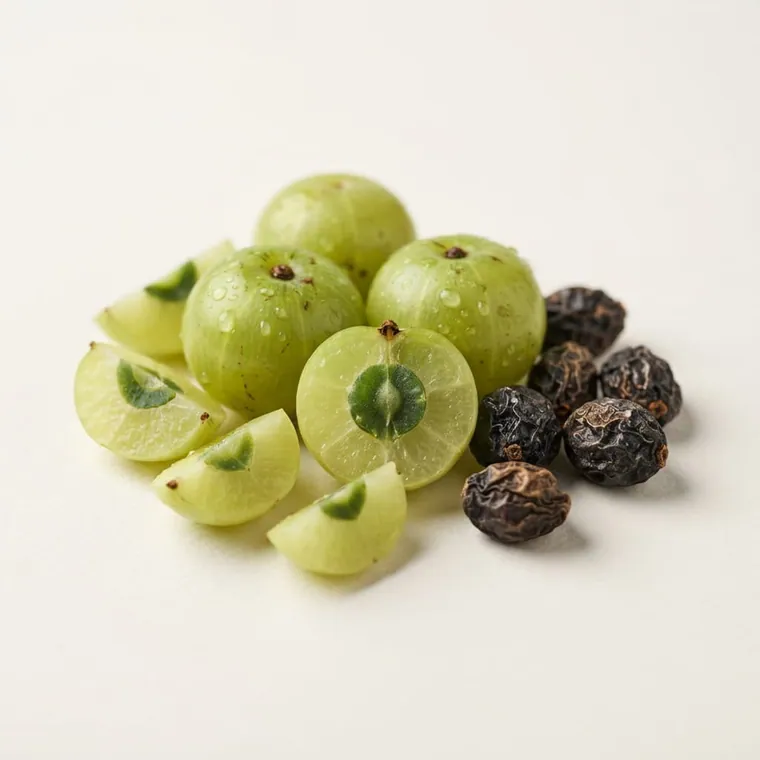
Amla is the fruit of Phyllanthus emblica, a deciduous tree that grows across India and Southeast Asia. The fruit is round, pale green and translucent, about the size of a large marble, with a sharply sour and slightly bitter taste. It is eaten fresh, pickled, candied, dried and juiced, and it is one of the three fruits in the traditional Ayurvedic blend triphala. You can read the botany in the Wikipedia article on Phyllanthus emblica.
In Ayurveda, amla is considered a rasayana, a fruit that supports overall vitality. In English it is usually called the Indian gooseberry, and supplement labels often use the short name emblica.
Why is amla so rich in antioxidants?
Amla is famous for two groups of compounds. The first is vitamin C: the fresh fruit is one of the richest plant sources of it. The second is a family of hydrolyzable tannins, including emblicanin A and B, punigluconin and pedunculagin, along with gallic acid and ellagic acid.
Researchers think these tannins help explain why amla’s antioxidant activity stays high even in dried fruit and extracts. If you want the background on the vitamin itself, see our vitamin C guide.

Amla benefits backed by research
Amla extract has been tested in several randomized human trials, mostly on blood-vessel function and markers of oxidative stress. Here are three of them.
- Healthy adults. In a randomized, double-blind, crossover, placebo-controlled study in Contemporary Clinical Trials Communications (Kapoor et al.), healthy adults took 500 mg of amla a day. The researchers reported better blood fluidity, lower markers of oxidative stress and improved HDL and LDL cholesterol values, with no safety concerns. See it on PubMed.
- Endothelial function. A randomized, double-blind study in Diabetes, Metabolic Syndrome and Obesity (Usharani et al.) tested a standardized aqueous amla extract for 12 weeks in adults with type 2 diabetes. It looked at blood-vessel function and oxidative-stress markers such as malondialdehyde and glutathione, and the extract was associated with improvements in both. See it on PubMed.
- Metabolic markers. A later placebo-controlled trial by the same group in BMC Complementary and Alternative Medicine studied the extract in adults with metabolic syndrome and reported favorable changes in endothelial function, oxidative stress and lipid markers. See it on PubMed.
Taken together, amla is best described as a fruit extract with high antioxidant capacity that may help support healthy blood vessels, with more studies under way.
How does amla appear on a label?
On a Supplement Facts panel you may see amla fruit extract, emblica extract, Indian gooseberry, Phyllanthus emblica or the older name Emblica officinalis. All of these refer to the same fruit. Some standardized extracts state a percentage of tannins or polyphenols.
Amla also shows up in herbal blends, from triphala powders to digestive and cleanse formulas, where it is often listed inside a proprietary blend.
Amla safety and interactions
Amla is a food fruit and has been well tolerated in human studies at typical supplement amounts. Its sour taste and acidity can bother a sensitive stomach, so taking it with a meal helps.
- Blood thinners. Amla may affect platelet activity, so ask a clinician before using it with anticoagulant or antiplatelet medicines, and before surgery.
- Blood-sugar medicines. Because amla has been studied for effects on glucose, people on diabetes medication should check with their clinician.
- Pregnancy and nursing. Amla as a food is common, but ask a clinician before using concentrated extracts.
Supplements are not a substitute for medical care, and this page is general information, not advice for your situation.
Which products we review contain amla?
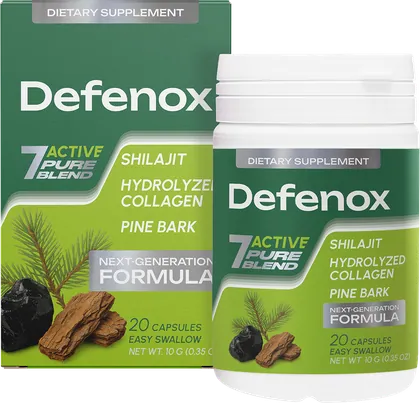
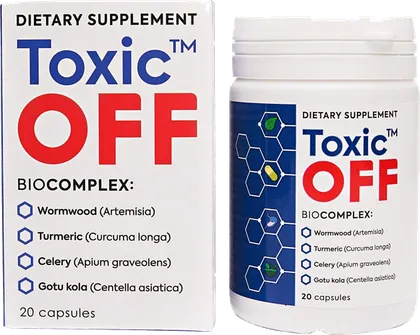
Two products we review contain amla. Defenox capsules include amla fruit extract alongside shilajit, pine bark extract and vitamin C; Defenox is designed to support prostate and urinary comfort and everyday vitality in men. Toxic OFF is a botanical cleanse formula designed to support digestion and the body’s natural cleansing, and it lists emblica extract next to wormwood, turmeric, gotu kola and celery.
This guide is general information, not medical advice. Ask your doctor or pharmacist before starting a new supplement, especially if you take medication, are pregnant or nursing.
Sources
- Wikipedia — Phyllanthus emblica
- Kapoor M.P. et al. Clinical evaluation of Emblica Officinalis (Amla) in healthy human subjects. Contemp Clin Trials Commun, 2020
- Usharani P. et al. Effects of Phyllanthus emblica extract on endothelial dysfunction and biomarkers of oxidative stress. Diabetes Metab Syndr Obes, 2013
- Usharani P. et al. Standardized aqueous extract of Phyllanthus emblica fruits in subjects with metabolic syndrome. BMC Complement Altern Med, 2019