Ingredient guide
Shilajit (Asphaltum punjabianum): The Mountain Resin Behind Men’s Vitality Formulas
Also known as: Asphaltum punjabianum, mumijo, mumie, moomiyo · By the VitaUSA360 Editorial Team
Quick answer
Shilajit is a dark, sticky resin that seeps from rock layers in high mountain ranges such as the Himalayas and the Altai. It is rich in fulvic acid and dibenzo-α-pyrones, and it has a long history in Ayurveda as a rasayana, or revitalizing tonic. Small randomized trials in men have looked at its effects on testosterone levels and on muscle strength after fatigue. For supplements, choose a purified extract and follow the label directions.
| What it is | A blackish-brown mineral-rich resin (an exudate) from mountain rock |
|---|---|
| Found in | Himalayas, Altai, Caucasus and other high mountain ranges |
| Key compounds | Fulvic acid, humic substances, dibenzo-α-pyrones, minerals |
| Traditional use | Ayurvedic rasayana (revitalizing tonic) |
| Typical forms | Purified extract in capsules, resin, powder |
| Label names | Shilajit extract, Asphaltum punjabianum, mumijo |
What is shilajit?
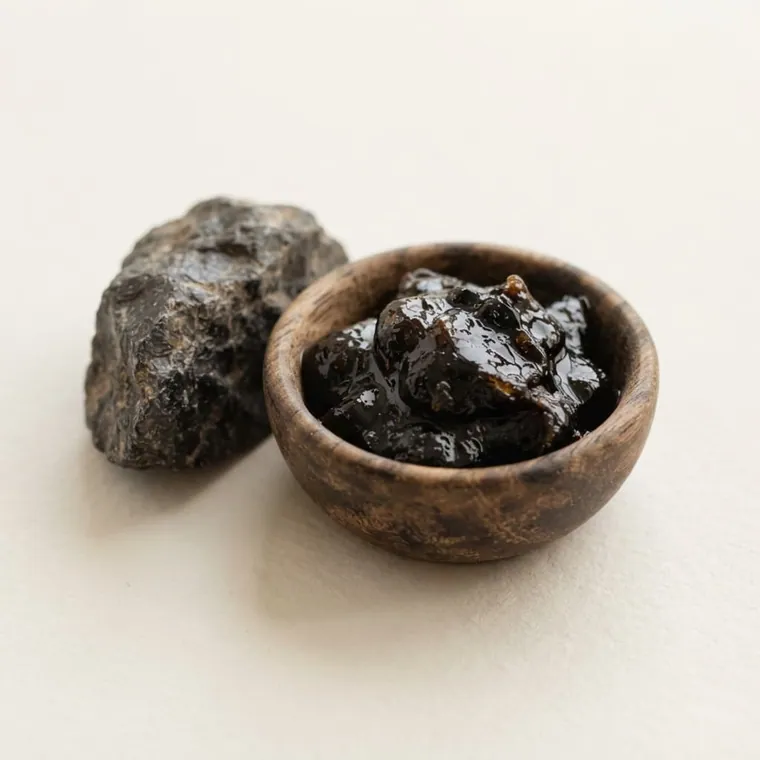
Shilajit is a natural resin that slowly oozes out of rock crevices in high mountains, especially in the warm months. It forms over a very long time as plant matter breaks down and mixes with minerals in the rock. When it is collected, it looks like a glossy, tar-like mass, dark brown to black, with a smoky, earthy smell.
The substance is known by many names: shilajit in India, mumijo or mumie in Central Asia and Russia, and Asphaltum punjabianum on some supplement labels. In Ayurveda it is classed as a rasayana, a tonic used to support strength and vitality as people age. You can read the general background in the Wikipedia article on shilajit.
Raw shilajit is never used as it comes out of the rock. It is dissolved, filtered and dried into a purified extract, which is the form that ends up in capsules.
What is in shilajit? Fulvic acid and other compounds
The main active fraction of shilajit is made of humic substances, and the best known of them is fulvic acid. Fulvic acids are small, water-soluble organic molecules formed when plant material breaks down in soil and rock. You can read more in the Wikipedia article on fulvic acid.
Shilajit also contains dibenzo-α-pyrones, small amounts of protein components and a range of minerals such as iron, zinc, magnesium and calcium. A review in Phytotherapy Research (Stohs) points to dibenzo-α-pyrones and fulvic acid as the constituents most likely behind the effects researchers have studied.

Shilajit benefits backed by research
Human research on shilajit is still a young field, but several controlled trials in men have produced encouraging results. Here are the studies most often cited.
- Testosterone in middle-aged men. In a randomized, double-blind, placebo-controlled study in Andrologia (Pandit et al.), healthy men aged 45 to 55 took 250 mg of purified shilajit twice a day for 90 days. Total testosterone, free testosterone and DHEAS were significantly higher than with placebo, while LH and FSH stayed in balance. See the abstract on PubMed.
- Strength after fatigue. A placebo-controlled trial in the Journal of the International Society of Sports Nutrition (Keller et al.) gave 63 recreationally active young men 250 mg or 500 mg of shilajit a day for 8 weeks. The higher dose was associated with better retention of muscle strength during a fatiguing leg-exercise task. See it on PubMed.
- A revitalizer in the literature. The Stohs review summarizes animal and human data describing shilajit as an antioxidant and adaptogenic “revitalizer” that may help support physical performance and energy, and it calls for more well-controlled studies with standardized products. See it on PubMed.
In short, shilajit is studied mainly for men’s vitality, energy and physical performance, and larger studies are ongoing.
How does shilajit appear on a supplement label?
On a label you will usually see Shilajit extract, sometimes followed by the Latin-style name Asphaltum punjabianum or the word “purified”. Some products also state a percentage of fulvic acid, which tells you how concentrated the extract is.
In a capsule blend, shilajit may be listed as part of a proprietary blend without a separate amount. That is common for multi-ingredient formulas. A quick checklist: look for the words purified or processed, a clear manufacturer or distributor address, and a lot number on the jar.
Shilajit safety and interactions
Purified shilajit has been well tolerated in the human trials above, and the Stohs review describes its safety as well documented in animal and human studies. A few common-sense points help you use it well.
- Choose purified products. Raw, unprocessed resin can carry heavy metals and other contaminants from the rock, so buy only purified extracts from a seller who names the manufacturer.
- Medical conditions. If you have a medical condition, such as a heart, kidney or iron-related condition, ask a clinician before adding shilajit.
- Medicines. If you take prescription medicines, check with your pharmacist about possible interactions.
- Pregnancy and nursing. Not suggested during pregnancy or breastfeeding.
- Follow the label. Stick to the serving size on the finished product.
Supplements are not a substitute for medical care, and this page is general information, not advice for your situation.
Which products we review contain shilajit?
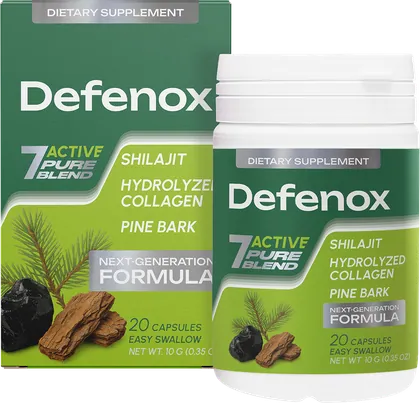
Among the products we review, Defenox capsules list shilajit extract first in their blend. Defenox is a dietary supplement designed to support prostate and urinary comfort and everyday vitality in men, and it pairs shilajit with French maritime pine bark extract, amla, vitamin C and hydrolyzed fish collagen. For a broader look at the category, see our guide to prostate health supplements and the men’s health category.
This guide is general information, not medical advice. Ask your doctor or pharmacist before starting a new supplement, especially if you take medication, are pregnant or nursing.
Sources
- Wikipedia — Shilajit
- Wikipedia — Fulvic acid
- Stohs S.J. Safety and efficacy of shilajit (mumie, moomiyo). Phytother Res, 2014
- Pandit S. et al. Clinical evaluation of purified Shilajit on testosterone levels in healthy volunteers. Andrologia, 2016
- Keller J.L. et al. The effects of Shilajit supplementation on fatigue-induced decreases in muscular strength and serum hydroxyproline levels. J Int Soc Sports Nutr, 2019