Ingredient guide
Lutein and Zeaxanthin: The Two Carotenoids Your Eyes Collect
Also known as: macular carotenoids · By the VitaUSA360 Editorial Team
Quick answer
Lutein and zeaxanthin are yellow carotenoid pigments that the body concentrates in the macula, the part of the retina responsible for sharp central vision. They help filter high-energy blue light and act as antioxidants. The National Eye Institute’s AREDS2 study used 10 mg of lutein and 2 mg of zeaxanthin in its formula. Leafy greens such as kale and spinach and egg yolks are the best food sources.

| What they are | Yellow carotenoid pigments (xanthophylls) |
|---|---|
| Where they collect | The macula of the retina — the “macular pigment” |
| Food sources | Kale, spinach, collards, corn, egg yolks |
| AREDS2 amounts | 10 mg lutein + 2 mg zeaxanthin per day |
| Absorption tip | Fat-soluble — take with a meal |
Why the eye collects them
Of the dozens of carotenoids in food, the retina selectively gathers lutein and zeaxanthin (plus meso-zeaxanthin, made from lutein in the eye). Together they form the yellow macular pigment, which absorbs blue light before it reaches the light-sensing cells and helps neutralize oxidative stress.
What AREDS2 tells us
The Age-Related Eye Disease Study 2 (AREDS2), run by the National Eye Institute, tested a supplement formula in people with intermediate age-related macular degeneration. Its updated formula replaced beta-carotene with 10 mg of lutein and 2 mg of zeaxanthin, alongside vitamin C, vitamin E, zinc and copper. That is why so many eye supplements are built around these nutrients. AREDS2 results apply to that specific group of people; for everyone else, lutein and zeaxanthin are part of normal eye nutrition.

Lutein and zeaxanthin benefits backed by research
Few nutrients have a research story as well documented as lutein and zeaxanthin for the eye. The key findings are below.
AREDS2 tested them in a large trial. The National Eye Institute’s AREDS2 study enrolled thousands of older adults at risk for advanced age-related macular degeneration. Adding 10 mg of lutein and 2 mg of zeaxanthin to the original formula was compared with the original beta-carotene version. The JAMA report on AREDS2 noted that lutein and zeaxanthin were a suitable replacement for beta-carotene, which is a particular advantage for current and former smokers.
They make up the macular pigment. The Lutein and Zeaxanthin entries describe how both carotenoids accumulate in the central retina, where they absorb blue light. Higher dietary intake is associated with higher macular pigment density in observational research.
Diet counts, too. The American Academy of Ophthalmology points to leafy greens, eggs and colorful vegetables as part of an eye-healthy diet, and the AREDS2 investigators also looked at how people’s usual dietary intake related to results.
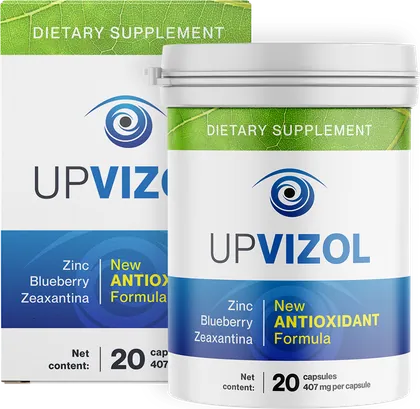
Context matters. AREDS2 results apply to people with intermediate or advanced macular changes. For other adults, lutein and zeaxanthin are best seen as part of normal eye nutrition. You will find them alongside zinc and vitamin-type nutrients in UpVizol capsules.
Food sources of lutein and zeaxanthin
Dark leafy greens are the richest everyday sources of lutein, and corn and egg yolks are good sources of zeaxanthin and lutein in a form the body absorbs readily.
- Kale, spinach and collard greens — the top lutein sources in USDA food composition data, and richer when cooked.
- Corn and orange peppers — notable for zeaxanthin.
- Egg yolks — smaller amounts, but the natural fat helps absorption.
- Peas, broccoli and romaine lettuce — useful everyday contributors.
You can look up exact amounts for any food in the USDA FoodData Central database. Because lutein and zeaxanthin dissolve in fat, add olive oil, avocado or eggs to a salad of greens to improve absorption.
Food first
A cup of cooked kale or spinach provides more lutein than most supplements. Because both carotenoids are fat-soluble, eating them with a little fat — olive oil, eggs, avocado — helps absorption. The same applies to capsules: take them with a meal.
Safety notes
Lutein and zeaxanthin are considered safe at the amounts used in supplements. High intakes can occasionally give the skin a harmless yellowish tint (carotenodermia). If you smoke or used to smoke, choose formulas without beta-carotene and talk to your doctor.
This guide is general information, not medical advice. Ask your doctor or pharmacist before starting a new supplement, especially if you take medication, are pregnant or nursing.