Buyer’s guide
AREDS2 and Eye Vitamins: What the Research Studied, in Plain English
By the VitaUSA360 Editorial Team
The short answer
AREDS2 is a National Eye Institute study that tested a specific supplement formula — vitamin C, vitamin E, zinc, copper, lutein and zeaxanthin — in people with intermediate or advanced age-related macular degeneration (AMD). Beta-carotene from the original AREDS formula was replaced by lutein and zeaxanthin. Everyday eye-nutrient supplements are a different category: they often use the same nutrients at different amounts and are not replicas of the study formula.
What are AREDS and AREDS2?
AREDS and AREDS2 are two large clinical studies run by the National Eye Institute (NEI), part of the National Institutes of Health. AREDS stands for Age-Related Eye Disease Study. Both studies asked whether specific high-dose nutrient combinations could affect the course of age-related macular degeneration, a condition of the macula, the central part of the retina that handles sharp, detailed vision.
The first study enrolled thousands of older adults and followed them for about six years. The second, AREDS2, tested updated versions of the formula in roughly four thousand people. Because they are carefully controlled trials, their results are the reason “AREDS” shows up on so many eye supplement labels today. You can read the background in the Wikipedia overview of the studies.
It helps to remember what these studies measured. The main outcome was whether people with a certain stage of AMD went on to develop the advanced form, not whether vision improved or whether healthy eyes stayed healthy. The researchers also kept careful track of safety, which is why the lung-cancer finding on beta-carotene in smokers shaped the second study. Reading the design of a trial, not just the headline, is the clearest way to understand what a supplement label is really borrowing from it.
What is in the AREDS2 formula?
The AREDS2 formula contains six nutrients per day: 500 mg of vitamin C, 400 IU of vitamin E, 10 mg of lutein, 2 mg of zeaxanthin, 80 mg of zinc (as zinc oxide) and 2 mg of copper. Copper is included because high zinc intake can interfere with copper absorption.
Notice how large these amounts are. They sit well above what a typical diet supplies, and that is by design: the researchers tested therapeutic-scale doses in a defined patient group. A formula with the same six names but much smaller amounts is not the same thing. For background on each nutrient, see our pages on vitamin C, vitamin E, zinc and lutein and zeaxanthin.
One more practical point: the AREDS2 formula is often taken as more than one capsule a day, with the daily amounts split across them. When you compare a label, check the serving size first. A product that lists 10 mg of lutein “per serving” where the serving is four capsules is a very different product from one that lists it per single capsule.
Who was AREDS2 actually studied in?
The AREDS formulas were studied in people who already had intermediate AMD in one or both eyes, or advanced AMD in one eye. In the original study, the antioxidant-and-zinc combination was associated with about a 25 percent lower risk of progressing to advanced AMD over five years in that group, according to the NEI. The results do not automatically carry over to people with early AMD, to people with healthy eyes, or to other eye conditions.
That is why the NEI describes the formula as relevant to people at higher risk of progression, and why an eye doctor is the right person to tell you which stage you are at. A dilated eye exam can show whether any macular changes are present. The American Academy of Ophthalmology makes the same point: nutrition supports eye health, but the study formulas are aimed at a specific diagnosis.

Why was beta-carotene replaced in AREDS2?
The original AREDS formula used 15 mg of beta-carotene. AREDS2 asked whether lutein and zeaxanthin could take its place. Two reasons drove the question. First, lutein and zeaxanthin are the carotenoids that actually accumulate in the macula, while beta-carotene does not. Second, other large studies had linked beta-carotene supplements to a higher chance of lung cancer in current and former smokers.
In the AREDS2 randomized trial published in JAMA, formulas with lutein and zeaxanthin performed at least as well as the beta-carotene version, and the swap removed the smoking-related concern. The same trial also tested omega-3 fatty acids and a lower zinc dose; the omega-3 additions did not change the main outcome, and the study did not find a clear difference with the lower zinc amount. The NEI now describes the lutein-and-zeaxanthin version as the preferred AREDS2 formula.
How are everyday eye vitamins different from the AREDS2 formula?
Everyday eye-nutrient supplements are designed for general nutritional support rather than for a diagnosed condition. They commonly combine lutein and zeaxanthin with zinc, vitamins A, C and E and plant extracts such as bilberry or blueberry, usually at amounts closer to normal dietary levels than the AREDS2 doses.
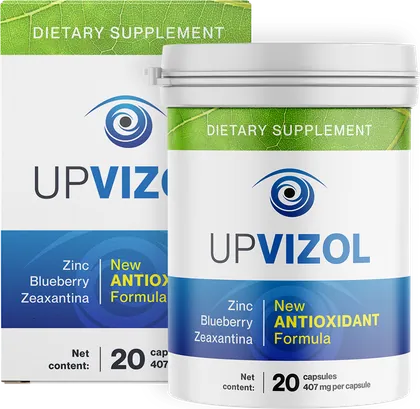
An example is UpVizol capsules (with lutein, zeaxanthin and zinc), which also lists blueberry and ginkgo biloba leaf extracts alongside vitamins A, C and E. It is positioned as an everyday eye-support formula, not as a replica of the AREDS2 formula: the nutrient lineup overlaps, but the amounts and the extra botanicals differ. Neither the study nor this comparison means one is “better”; they are built for different purposes. If you have been told you have intermediate AMD, ask your eye doctor which formula fits you.
Many people at a stage like this also keep up with other habits that the NEI lists for eye health, including not smoking, controlling blood pressure and wearing sunglasses outdoors. Supplements are one piece of that picture, and they work alongside a varied diet, not in place of it.
Which foods supply eye-friendly nutrients?
Food comes first, and the list is familiar. Lutein and zeaxanthin are found in kale, spinach, collards, peas, corn and egg yolks. Vitamin C comes from citrus, peppers, strawberries and broccoli. Vitamin E comes from almonds, sunflower seeds and vegetable oils. Zinc is found in oysters, beef, pumpkin seeds and beans. Fatty fish such as salmon provide omega-3 fats, which the American Academy of Ophthalmology includes in its eye-healthy eating advice.
Lutein and zeaxanthin are fat-soluble, so a little olive oil, avocado or egg with a spinach salad helps your body absorb them. Blue and purple fruit such as blueberries add anthocyanins, which are covered on our bilberry and blueberry page.
A simple meal plan shows how little effort this takes. Spinach and eggs at breakfast supply lutein and zeaxanthin with the fat they need. A citrus fruit or a pepper at lunch supplies vitamin C. A handful of almonds in the afternoon adds vitamin E, and a serving of beans or pumpkin seeds at dinner adds zinc. Foods deliver these nutrients along with fiber and other plant compounds, which is one reason dietitians suggest treating a capsule as a complement to meals, not a stand-in.

How do you read an eye supplement label?
Start with the Supplement Facts panel. Check the serving size, then compare each amount with the AREDS2 numbers above if that is your reference point. Look for lutein and zeaxanthin in milligrams, zinc in milligrams (and whether copper is listed alongside it), and vitamin A, which should be stated as retinol, beta-carotene or both.
Vitamin A deserves a second look. The NIH Office of Dietary Supplements sets an upper limit for preformed vitamin A of 3,000 mcg RAE per day for adults, so add up every product you take, including multivitamins (see vitamin A). The same goes for zinc, where the adult upper limit is 40 mg a day from all sources. Our guide to reading a Supplement Facts label covers the rest of the panel.
Finally, watch the wording. “Supports eye health” is a structure/function statement and is allowed on supplements; a claim that a product treats or prevents a specific eye disease is not. If a label uses AREDS-style language, check whether the amounts match the study or only the nutrient names. Both kinds of products can be reasonable choices, as long as you know which one you are holding.
What are practical everyday habits for eye health?
- Eat greens most days. A cup of cooked spinach or kale a few times a week is a simple source of lutein.
- Wear sunglasses outdoors. Look for lenses that block ultraviolet light and a wraparound fit.
- Do not smoke. Smoking is a well-known risk factor for AMD according to the NEI.
- Keep moving. Regular activity supports healthy blood flow, including to the eyes.
- Take capsules with a meal. Fat-soluble nutrients such as lutein and vitamin E absorb better that way.
- Bring your labels to appointments. Your pharmacist can check them against your medicines. Ginkgo, for example, is flagged for people who use blood thinners.
When should you see an eye doctor?
See an eye doctor if you notice straight lines that look wavy, a dark or blurry spot in the center of your vision, sudden changes in how colors look, or trouble reading that glasses do not fix. Sudden vision loss, flashes of light or a curtain over part of your vision are urgent: seek care the same day.
Adults over 60, and anyone with a family history of AMD, should ask about a dilated eye exam as often as their eye doctor advises. A supplement is not a substitute for an exam, and it is not intended to diagnose, prevent or treat any disease. If you take medication, mention every supplement you use at the visit.
General information only — not medical advice. Talk to your doctor or pharmacist about your situation.
Sources
More guides
- Prostate Supplements: What Is Inside and How to Choose One
- Nocturia in Men: Why You Wake Up to Urinate and What Helps
- Seven Foods Men Can Eat for Prostate Wellness
- Parasite Cleanse Explained: Herbal Formulas, Doctor Testing and Prevention
- How to Ease Bloating and Support Healthy Digestion
- Matcha or Coffee? A Side-by-Side Look at Your Morning Cup
- Green Tea, Matcha and Weight Management: A Practical Guide
- Making Matcha at Home: Step-by-Step for Every Style
- Joint Supplements Explained: Nine Ingredients and What Studies Say
- Glucosamine, Chondroitin, MSM and Boswellia: A Fair Comparison
- Why Are My Joints Stiff in the Morning, and What Can Help?
- Vitamin C for Collagen: How Your Body Builds It
- Digital Eye Strain: Why Screens Tire Your Eyes and What Helps
- How Supplements Are Regulated in the U.S. and What Third-Party Testing Means
- Cold or Heat for Sore Muscles: A Practical Guide
- Sore After a Workout? What Muscle Soreness Is and How to Ease It
- How Muscle Rubs Work: A Plain-English Guide to Topical Relief
- Peptides in Skin Care: What They Are and How They Are Used
- Skin Care After 50: What Changes and What to Look For
- How to Read a Supplement Facts Label in Five Minutes
- Supplements and Medications: Five Interactions Worth Checking
- Ordering Supplements Online: A Practical Buyer’s Checklist