Buyer’s guide
Prostate Supplements: What Is Inside and How to Choose One
By the VitaUSA360 Editorial Team
The short answer
Prostate health supplements are dietary supplements designed to support prostate and urinary comfort in men. The ingredients you will see most often are saw palmetto, pygeum, pumpkin seed, lycopene and zinc, and newer formulas add botanicals such as French maritime pine bark extract and shilajit. Read the Supplement Facts panel for named ingredients and amounts, and talk to a doctor about any change in urination.
What are prostate health supplements?
Prostate health supplements are capsules or softgels that combine plant extracts, nutrients and minerals traditionally associated with men’s urinary comfort. In the United States they are sold as dietary supplements, so they carry a Supplement Facts panel and use structure/function wording such as “supports prostate health.”
The prostate is a walnut-sized gland below the bladder. It wraps around the urethra, the tube that carries urine out of the body, which is why prostate wellness and urinary comfort are usually discussed together. The NIDDK explains that the prostate naturally changes as men get older, and many men start paying attention to it in their forties and fifties.
Most formulas fall into two families. Classic formulas are built around saw palmetto and pygeum. Newer, “next-generation” blends lean on antioxidant botanicals and mineral-rich extracts such as pine bark and shilajit. Both families aim at the same goal: everyday comfort and vitality.
Which ingredients are common in prostate supplements?
Five ingredients appear on most prostate-support labels. Here is what each one is.
- Saw palmetto (Serenoa repens) is the berry of a small palm native to the southeastern United States. It is the most widely studied botanical in this category. The NCCIH notes it has been used safely in research studies for up to three years and does not appear to affect PSA readings.
- Pygeum is bark extract from the African cherry tree (Prunus africana). A Cochrane review (Wilt et al.) of earlier trials reported a modest improvement in urinary symptom scores, and larger studies continue.
- Pumpkin seed (Cucurbita pepo) oil or powder supplies phytosterols and zinc and has a long history of use in European herbal practice.
- Lycopene is the red carotenoid pigment in tomatoes and watermelon, valued as an antioxidant.
- Zinc is a mineral that the prostate holds in unusually high concentration. The adult RDA for men is 11 mg a day, according to the NIH Office of Dietary Supplements.
You will often see two or three of these combined in one capsule, sometimes with vitamin D, selenium or stinging nettle root.

What do pine bark extract and shilajit add to a prostate formula?
Pine bark extract and shilajit bring an antioxidant and mineral angle to newer men’s formulas.
French maritime pine bark extract (Pinus pinaster) is rich in procyanidins, the same family of polyphenols found in grape seeds and cocoa. Its best-known branded form, Pycnogenol, has been studied for circulation and men’s vitality (see Wikipedia). Our pine bark extract guide covers the details.
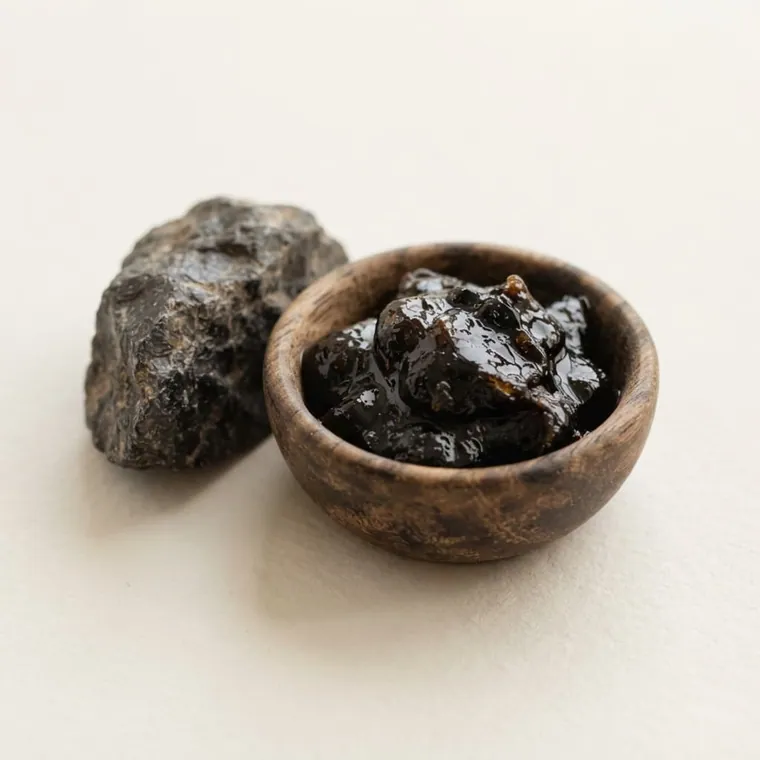
Shilajit is a tar-like resin that seeps from rocks in high mountain ranges such as the Himalayas. It contains fulvic acid and trace minerals and has been used in Ayurvedic practice for centuries as a tonic for energy and stamina. Choose purified shilajit from a reputable maker, and ask a clinician first if you have a medical condition. More on our shilajit page.
Other supporting botanicals in this family include amla (Indian gooseberry), a fruit naturally rich in vitamin C, and passionflower, a calming herb often used in evening blends.
How do you read a prostate supplement label?
Start with the Supplement Facts panel, not the front of the box. Check these points:
- Named ingredients with plant part: “saw palmetto berry extract” or “pine bark extract (Pinus pinaster)” tells you more than “men’s herbal complex.”
- Amount per serving: each ingredient should show milligrams. A proprietary blend lists only the total blend weight.
- Standardization: some extracts list a key compound, for example “standardized to 85–95% fatty acids” for saw palmetto.
- Serving size and count: divide capsules by daily servings to see how long a jar lasts.
- Other ingredients: the capsule shell and fillers matter if you avoid gelatin or fish.
- Quality seals: a USP or NSF mark shows third-party testing of the finished product.
Our walkthroughs on reading a Supplement Facts label and third-party testing go deeper.
Which prostate supplement formulas do we review?
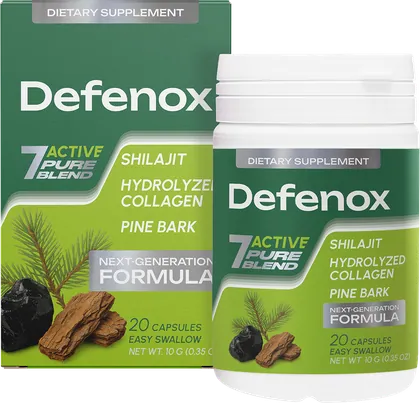
One formula we review in depth is Defenox, a dietary supplement designed for men who want to support prostate and urinary comfort and everyday vitality.
Defenox belongs to the newer botanical family. Its blend combines shilajit extract, French maritime pine bark extract, marshmallow root, amla fruit extract, passionflower, vitamin C and hydrolyzed fish collagen, among others. The directions are simple: one capsule once a day after a meal, and a jar of 20 capsules lasts 20 days.
You can see the full ingredient list on the Defenox product page and read what customers say in the Defenox reviews. As with any supplement, give it a few weeks of consistent use and keep notes on how you feel.
Are prostate supplements safe to take with medication?
Most prostate-support ingredients are well tolerated by healthy adults, but a quick check with a pharmacist is always worth it.
- Zinc: the adult upper limit is 40 mg a day from all sources. Long-term high doses can lower copper levels, so add up zinc from a multivitamin and any other product.
- Blood thinners: mention saw palmetto, pine bark extract and other botanicals to your doctor if you take an anticoagulant.
- Calming herbs: passionflower may add to drowsiness from sedatives or sleep aids.
- Hormone-related medicines: tell your doctor about any prostate supplement if you take prescription medicine for urinary symptoms.
Bring the label to your appointment. Our article on supplement and medication interactions has a simple checklist.
When should a man see a doctor about urinary symptoms?
See a doctor whenever urination changes in a way you notice. A check-up is quick and gives you a clear picture.
- a weak or interrupted stream, or straining to start;
- waking two or more times a night to urinate;
- a feeling that the bladder is not empty;
- pain or burning, or blood in the urine;
- fever with urinary discomfort, or being unable to urinate at all (get care the same day).
Men in their fifties and sixties can also ask their doctor about prostate check-ups and whether a PSA test makes sense for them. MedlinePlus has a plain-language overview. A supplement is designed to support everyday comfort, and your doctor is the right person to evaluate symptoms.
General information only — not medical advice. Talk to your doctor or pharmacist about your situation.
Sources
More guides
- Nocturia in Men: Why You Wake Up to Urinate and What Helps
- Seven Foods Men Can Eat for Prostate Wellness
- Parasite Cleanse Explained: Herbal Formulas, Doctor Testing and Prevention
- How to Ease Bloating and Support Healthy Digestion
- Matcha or Coffee? A Side-by-Side Look at Your Morning Cup
- Green Tea, Matcha and Weight Management: A Practical Guide
- Making Matcha at Home: Step-by-Step for Every Style
- Joint Supplements Explained: Nine Ingredients and What Studies Say
- Glucosamine, Chondroitin, MSM and Boswellia: A Fair Comparison
- Why Are My Joints Stiff in the Morning, and What Can Help?
- Vitamin C for Collagen: How Your Body Builds It
- AREDS2 and Eye Vitamins: What the Research Studied, in Plain English
- Digital Eye Strain: Why Screens Tire Your Eyes and What Helps
- How Supplements Are Regulated in the U.S. and What Third-Party Testing Means
- Cold or Heat for Sore Muscles: A Practical Guide
- Sore After a Workout? What Muscle Soreness Is and How to Ease It
- How Muscle Rubs Work: A Plain-English Guide to Topical Relief
- Peptides in Skin Care: What They Are and How They Are Used
- Skin Care After 50: What Changes and What to Look For
- How to Read a Supplement Facts Label in Five Minutes
- Supplements and Medications: Five Interactions Worth Checking
- Ordering Supplements Online: A Practical Buyer’s Checklist