Buyer’s guide
Glucosamine, Chondroitin, MSM and Boswellia: A Fair Comparison
By the VitaUSA360 Editorial Team
The short answer
Glucosamine and chondroitin are cartilage building blocks and the most studied pair; MSM is a sulfur compound; boswellia and turmeric are plant extracts. The NIH-funded GAIT trial found no overall difference from placebo for glucosamine and chondroitin, with a possible benefit in a subgroup with moderate-to-severe knee pain, while smaller trials of MSM and boswellia have reported improvements in comfort. Which suits you depends on tolerance, allergies, medications and preferences.
Glucosamine vs MSM: which is better for joints?
Neither is “better” in every case, because they work from different starting points. Glucosamine is an amino sugar your body uses to make the molecules that give cartilage its structure. MSM is an organic sulfur compound, and sulfur is needed to build connective tissue proteins.
Glucosamine has far more trial data behind it. MSM has fewer, smaller trials, but several have reported improvements in knee comfort and function. Many people choose by tolerance: glucosamine often comes from shellfish, while MSM does not, which matters if you have a shellfish allergy. Vegetarian glucosamine made by fermentation also exists, so check the source on the label. Our MSM page covers food sources and typical doses.
Another difference is timeline. In the studies that reported benefits, glucosamine and chondroitin were usually taken for several months, while MSM trials were often shorter, around eight to twelve weeks. When you evaluate your own experience, give any product a fair, consistent trial and write down how you feel at the start, so you have something to compare with.
What did the GAIT trial find about glucosamine and chondroitin?
GAIT is the landmark U.S. study. The Glucosamine/chondroitin Arthritis Intervention Trial enrolled more than 1,500 people with knee osteoarthritis and compared glucosamine, chondroitin sulfate, both together, the anti-inflammatory drug celecoxib and placebo for six months. Across all participants, the supplements did not significantly reduce pain compared with placebo. In a smaller subgroup with moderate-to-severe pain, the combination was associated with more relief (Clegg et al., NEJM, on PubMed).
The NCCIH summarizes the broader literature in its pages on glucosamine and chondroitin and chondroitin. The overall picture: results are mixed, many people tolerate these ingredients well, and some report a personal benefit. The GAIT design is worth noting: participants rated their own knee pain, so the study captured how people actually felt, and it was funded by the NIH to give an independent answer. Later analyses and follow-up work continued to explore which people might respond more. Background on each is on Wikipedia for glucosamine and chondroitin sulfate.
What does research say about MSM?
MSM has been studied in small randomized trials, typically 12 weeks or less, in adults with knee discomfort. Doses in these studies were commonly around 3 grams a day, split into two servings. Reported outcomes included less discomfort and better physical function compared with placebo, and mild digestive upset was the most common side effect mentioned.
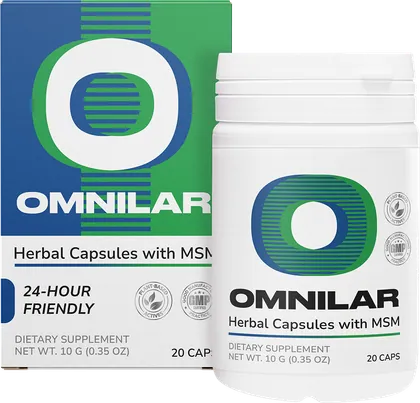
Researchers describe the evidence as encouraging but limited by small sample sizes. Larger and longer studies are ongoing. Sulfur-containing compounds are also found in garlic, onions and cruciferous vegetables, so MSM fits naturally into a food-first view of connective-tissue nutrition. MSM is a staple of combination formulas, including Omnilar herbal capsules, which pair it with boswellia, Devil’s Claw and vitamin C.

Boswellia vs turmeric: how do they compare?
Both are plant-based, and both are frequently studied for comfort in people with knee osteoarthritis. Boswellia serrata is a tree resin whose active compounds are boswellic acids, particularly acetyl-11-keto-beta-boswellic acid (AKBA). Turmeric is a root whose key compounds are curcuminoids.
Small randomized trials of both have reported improvements in comfort and mobility, and the NCCIH describes boswellia and turmeric as promising but still being studied. A practical difference is absorption: curcumin is poorly absorbed on its own, so labels often add black pepper extract or a special delivery form. Boswellia extracts are usually standardized to a percentage of boswellic acids. See our boswellia page for label tips.
If you already cook with turmeric, adding a little black pepper and a source of fat to the dish is a traditional way to make the most of it. If you prefer capsules, standardized extracts give you a measured amount, which is hard to guess from kitchen spices. Boswellia is rarely eaten, so it is nearly always found in capsule or tablet form.
Glucosamine, MSM, boswellia and turmeric side by side
This table summarizes the main points in plain language. It is a guide to the research, not a recommendation for any one person.
| Ingredient | What it is | Research snapshot | Label cues | Cautions |
|---|---|---|---|---|
| Glucosamine | Amino sugar found in cartilage | Large trials (GAIT); mixed overall results | Sulfate or HCl form; usually 1,500 mg a day in studies | Often shellfish-derived |
| Chondroitin | Cartilage component | Studied with glucosamine; mixed results | Chondroitin sulfate; mg per serving | May affect clotting in high doses |
| MSM | Organic sulfur compound | Small trials; encouraging comfort outcomes | Grams per serving | Mild stomach upset reported |
| Boswellia | Tree resin (boswellic acids) | Small trials in knee osteoarthritis | Percent boswellic acids or AKBA | Check with your doctor if on medication |
| Turmeric | Root (curcuminoids) | Small trials; study quality varies | Percent curcuminoids; absorption aid | May interact with blood thinners |

Who might each ingredient suit?
Because the research is evolving, think in terms of fit rather than a winner:
- Glucosamine and chondroitin may suit people who want the most-studied option and have no shellfish allergy or clotting concerns.
- MSM may suit people who prefer a non-shellfish ingredient with a short ingredient list and a long track record in formulas.
- Boswellia may suit people drawn to a plant-based option with standardized extracts.
- Turmeric may suit people who already enjoy it in food and want a concentrated, standardized curcumin form.
- Combination formulas may suit people who prefer one simple daily habit. For example, Omnilar combines MSM, boswellia and Devil’s Claw with vitamin C.
If you read product pages, remember that sellers describe formulas in marketing language, while the Supplement Facts panel is the regulated part of the label. Treat the panel as your reference point and the front of the package as an introduction.
Whatever you choose, give it a fair trial of several weeks, change one thing at a time, and keep notes about how you feel.
Budget and convenience matter as well. Some people like a single capsule with several ingredients, others prefer to control each dose separately. Neither approach is wrong; the label should let you see exactly what you are getting either way. If a product does not tell you the amount of each ingredient, you can ask the seller or look for one that does, and our article on supplement regulation and third-party testing explains what quality signals to look for.
Can I combine joint supplement ingredients?
Many products combine them, and people often take two or three together. Combining raises two questions: total amounts and interactions. Add up what each label provides, particularly for vitamin C, and avoid doubling the same ingredient from two products.
Several of these ingredients, including turmeric, Devil’s Claw, chondroitin in high doses and fish oil, can interact with blood thinners or diabetes medication. The NIH Office of Dietary Supplements recommends telling every healthcare provider about the supplements you use. Our guide on supplement and medication interactions includes a short checklist for your pharmacist.
If you are pregnant, nursing, scheduled for surgery or managing a long-term condition, check with your healthcare provider before adding any of them. That advice applies equally to plant extracts and to single compounds like glucosamine.
When should I see a doctor about joint pain?
See a doctor if joint pain lasts more than a few weeks, if a joint is swollen, red or warm, if stiffness in the morning lasts more than about 30 minutes, or if pain follows an injury. A clinician can identify the cause and discuss options such as physical therapy, exercise plans and medication. Bring your supplement bottles or a photo of each label to the visit, so your provider can see exactly what you take and in what amounts.
Supplements are not intended to diagnose, treat or prevent any disease. They are better seen as one part of a broader plan that includes movement, weight, sleep and medical advice. The NIAMS overview of osteoarthritis is a good place to read about the condition before an appointment.
General information only — not medical advice. Talk to your doctor or pharmacist about your situation.
Sources
More guides
- Prostate Supplements: What Is Inside and How to Choose One
- Nocturia in Men: Why You Wake Up to Urinate and What Helps
- Seven Foods Men Can Eat for Prostate Wellness
- Parasite Cleanse Explained: Herbal Formulas, Doctor Testing and Prevention
- How to Ease Bloating and Support Healthy Digestion
- Matcha or Coffee? A Side-by-Side Look at Your Morning Cup
- Green Tea, Matcha and Weight Management: A Practical Guide
- Making Matcha at Home: Step-by-Step for Every Style
- Joint Supplements Explained: Nine Ingredients and What Studies Say
- Why Are My Joints Stiff in the Morning, and What Can Help?
- Vitamin C for Collagen: How Your Body Builds It
- AREDS2 and Eye Vitamins: What the Research Studied, in Plain English
- Digital Eye Strain: Why Screens Tire Your Eyes and What Helps
- How Supplements Are Regulated in the U.S. and What Third-Party Testing Means
- Cold or Heat for Sore Muscles: A Practical Guide
- Sore After a Workout? What Muscle Soreness Is and How to Ease It
- How Muscle Rubs Work: A Plain-English Guide to Topical Relief
- Peptides in Skin Care: What They Are and How They Are Used
- Skin Care After 50: What Changes and What to Look For
- How to Read a Supplement Facts Label in Five Minutes
- Supplements and Medications: Five Interactions Worth Checking
- Ordering Supplements Online: A Practical Buyer’s Checklist